
Cosplay Armor Patterns: Building Structure, Accuracy, and Wearability
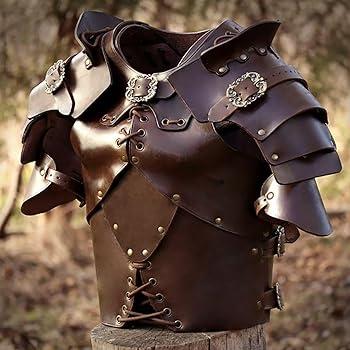
Cosplay armor patterns play a defining role in how believable, comfortable, and functional an armor build turns out. For creators working on historical, fantasy, or character-based armor, patterns are not just templates—they are the foundation that determines fit, mobility, and realism. In modern armor crafting, the focus has shifted toward precision-based pattern development that balances aesthetics with real-world wearability.
When working with cosplay armor patterns, the process usually begins with understanding body proportions rather than relying on flat or generic measurements. Armor that looks impressive on a mannequin can restrict movement when worn if the pattern doesn’t account for articulation points like shoulders, elbows, hips, and knees. This is why experienced armor crafters emphasize segmented designs that allow overlap and flex without breaking visual continuity.
Another critical factor is material behavior. EVA foam, leather, thermoplastics, and metal all respond differently once cut and shaped. Patterns must be adjusted based on how much a material stretches, compresses, or hardens after forming. For example, foam armor often requires exaggerated pattern curves to compensate for thickness, while leather patterns demand allowance for stitching and edge finishing. Ignoring these adjustments often leads to armor that appears bulky or misaligned once assembled.
Accuracy is another area where patterns make or break a cosplay build. Reference-based pattern drafting—using game models, film stills, or historical illustrations—helps align proportions correctly. This is especially important when recreating structured armor sets inspired by medieval or fantasy sources, where symmetry and panel spacing define authenticity. Clean line flow across chest plates, pauldrons, and greaves ensures the final piece reads as armor rather than costume.
Advanced pattern workflows also include test builds. Creating mock-ups from inexpensive material allows crafters to refine fit and movement before committing to final materials. This step reduces waste and improves overall build quality. Adjustments made at the pattern stage are far easier than post-assembly fixes, particularly for complex layered designs.
Many armor styles—such as those inspired by imperial knights - require a balance between imposing structure and practical wear. These designs often feature broad chest forms, reinforced shoulders, and detailed surface elements, all of which rely heavily on accurate pattern segmentation. Without thoughtful pattern planning, these visually strong designs can become uncomfortable or visually inconsistent when worn for extended periods.
As armor crafting continues to evolve, pattern development remains a skill that separates basic builds from professional-grade work. Understanding anatomy, materials, and movement at the pattern level leads to armor that not only looks right but feels right during use.
Final Thoughts
Strong cosplay armor patterns define structure, comfort, and accuracy. Investing time in pattern planning consistently results in better-performing, more realistic armor builds.

 English
 French
 Spanish
 Portuguese
 Deutsch
 Turkish
 Dutch
Dutch
 Italiano
 Russian
 Romaian
 Portuguese (Brazil)
 Greek
Greek