
What Are Laser Trackers? A Complete Beginner’s Guide
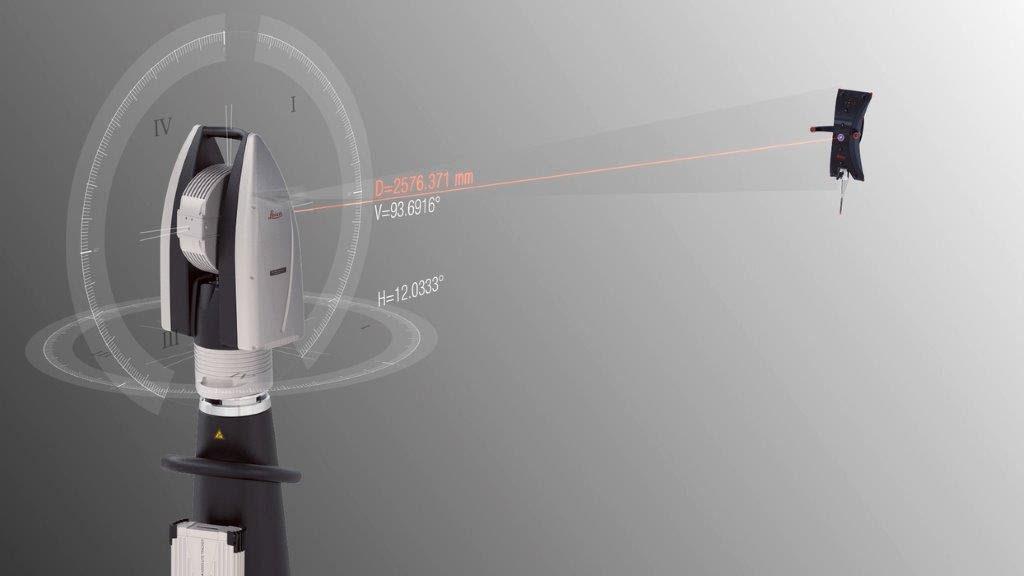
If you work in manufacturing, engineering, construction, or aerospace, you’ve probably heard the term laser trackers—but what exactly are they, and why are they becoming essential tools in precision measurement? Whether you're just getting started or curious about how this technology works, this beginner-friendly guide will break everything down in simple terms.
Laser trackers are powerful, portable measurement systems designed to capture extremely accurate 3D positions of objects, tools, or components. They play a crucial role in ensuring precision, improving workflow, and reducing costly errors. To explore more about how this technology works in real-world environments, take a look at Laser Trackers.
1. What Exactly Is a Laser Tracker?
A laser tracker is a high-precision metrology instrument that uses laser technology to measure large objects with incredible accuracy. Think of it as a super-powered measuring tape—but instead of inches and feet, you get precise 3D coordinates, often within microns.
These devices rotate 360 degrees, track a reflective target, and provide real-time measurements as the target moves. This makes them ideal for measuring large components that traditional tools simply can’t handle accurately.
2. How Do Laser Trackers Work?
At its core, a laser tracker emits a laser beam that continuously follows a reflective target called an SMR (Spherically Mounted Retroreflector). As the target moves around an object, the tracker calculates distance and angle, converting that information into precise 3D points.
Most modern systems use two key technologies:
Interferometry (IFM)
Measures distance through changes in light waves, offering extremely high accuracy.
Absolute Distance Measurement (ADM)
Provides instant measurements without needing a continuous beam.
Many laser trackers now use a hybrid system for fast, reliable, and ultra-accurate results.
3. Why Are Laser Trackers So Important?
Laser trackers have become essential in industries where precision isn’t just helpful—it’s critical. A small measurement error in aerospace or medical manufacturing, for example, can cost thousands or compromise safety.
These tools help teams:
-
Validate large-scale components
-
Improve assembly accuracy
-
Speed up inspection processes
-
Reduce rework and waste
Their ability to capture precise measurements over long distances makes them irreplaceable for modern manufacturers.
4. Key Benefits of Using Laser Trackers
Laser trackers come with a long list of advantages. Here are the biggest ones:
High Accuracy
Laser trackers can measure within microns, ensuring reliable and repeatable results.
Long-Range Measurement
Perfect for large machinery, aircraft parts, or construction layouts.
Portable and Flexible
Unlike fixed CMMs, you can bring a laser tracker directly to the worksite.
Fast Data Collection
Capture thousands of points in seconds for fast inspection and analysis.
Reduced Errors
More precise measurements lead to less rework and fewer mistakes.
These benefits make laser trackers a smart investment for any business prioritizing accuracy and efficiency.
5. Common Applications of Laser Trackers
Laser trackers are used across a variety of industries thanks to their versatility. Here’s where you’ll find them most often:
Aerospace
Ensuring aircraft components meet strict tolerances.
Automotive Manufacturing
Alignment of tooling, assembly fixtures, and vehicle components.
Heavy Equipment Manufacturing
Measuring large machinery parts and assemblies.
Construction & Civil Engineering
Structural alignment, layout verification, and quality checks.
Robotics & Automation
Calibrating robots and machine tools for precise workflows.
Laser trackers are invaluable wherever accuracy, consistency, and traceability matter.
6. Who Should Use Laser Trackers?
Laser trackers are ideal for:
-
Engineers
-
Quality inspectors
-
Manufacturing teams
-
Tooling specialists
-
Construction supervisors
-
Robotics integrators
Anyone working with large-scale or precision components can benefit from laser tracker technology.
7. What Makes Laser Trackers Different from Other Measuring Tools?
Compared to traditional measuring tools like calipers, tape measures, or even fixed CMMs (Coordinate Measuring Machines), laser trackers stand out because they:
-
Cover much larger distances
-
Offer higher accuracy
-
Provide 3D digital data instantly
-
Can be used on-site instead of in controlled environments
They're essentially the perfect blend of accuracy and portability.
8. Choosing the Right Laser Tracker for Your Needs
Not all laser trackers are created equal. When selecting one, consider:
-
Measurement range
-
Accuracy level
-
Portability
-
Software compatibility
-
Industry-specific features
For many companies, expert guidance is essential to make the best choice. You can explore more solutions designed for modern manufacturing and digital metrology through resources like Laser Trackers which help businesses choose the right system for their environment.
9. How Laser Trackers Support Modern Industry Trends
Today’s industries rely heavily on automation, digital twins, and Industry 4.0 technology. Laser trackers play a major role in supporting these trends by:
-
Enabling real-time data capture
-
Providing highly accurate models for digital twins
-
Supporting automated inspection systems
-
Improving workflow efficiency and traceability
As manufacturing becomes smarter, laser trackers become even more valuable.
10. Future Developments in Laser Tracker Technology
Laser trackers continue to evolve with improvements in:
-
Wireless capabilities
-
Enhanced accuracy and speed
-
AI-assisted measurement workflows
-
Integration with robotics and automated systems
-
More compact and portable designs
The future promises even more user-friendly and intelligent tools.
Final Thoughts: Are Laser Trackers Worth It?
If accuracy, efficiency, and reliability matter in your work, then yes—laser trackers are absolutely worth the investment. They offer unmatched precision, flexibility, and ease of use, making them a must-have tool for modern engineering and manufacturing environments.

 English
 Arabic
 French
 Spanish
 Portuguese
 Deutsch
 Turkish
 Dutch
Dutch
 Italiano
 Russian
 Portuguese (Brazil)
 Greek
Greek