
Soy Lecithin Market Size & Outlook by FMI: Global Industry Forecast 2026–2036
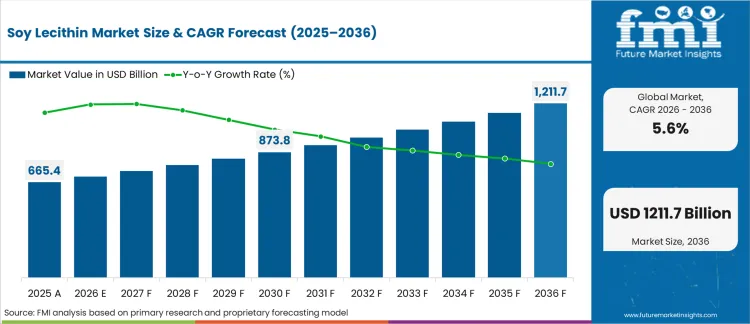
USA | March 12, 2026 — The global shift toward plant-based functional ingredients is reaching a critical inflection point. According to the latest strategic industry analysis by Future Market Insights (FMI), the global soy lecithin market value at is projected to grow to USD 702.7 million in 2026, before climbing to USD 1,211.7 million by 2036.
This robust expansion, representing a 5.6% CAGR, reflects an absolute dollar growth of USD 509.0 million over the next decade. The surge is being propelled by aggressive clean-label reformulation in processed foods, the rapid proliferation of meat and dairy alternatives, and an emerging high-margin frontier in pharmaceutical excipients.
The "Clean-Label" Catalyst: Replacing Synthetics with Soy
As consumers demand transparency, food manufacturers are systematically replacing synthetic emulsifiers with plant-derived phospholipids. Soy lecithin has emerged as the gold standard for "label-friendly" stabilization in bakery, confectionery, and dairy sectors.
"The updated 2026-2036 market outlook reveals a landscape of increasing procurement complexity," notes Nandini Roy Choudhury, Principal Consultant for Food & Beverage at Future Market Insights. "The Bunge-Viterra merger has concentrated upstream supply among fewer originators, creating a dependency risk for mid-tier manufacturers. Furthermore, the implementation of the EU Deforestation Regulation (EUDR) is widening the price gap between certified and commodity grades, fundamentally changing how global supply chains operate."
Segmental Leadership: Food and Emulsification Rule the Value Chain
The FMI report highlights three dominant segments defining the 2026 market structure:
- Food Grade (30.2% Market Value): Driven by the critical need for texture enhancement and shelf-life extension in packaged goods.
- Emulsifiers (25.5% Function Demand): Anchored by soy lecithin’s unique ability to stabilize oil-water mixtures across food and pharmaceutical manufacturing.
- Food End-Users (38.7% Share): Supported by the massive scaling of the plant-based sector, where lecithin serves as a vital functional binder in vegan meat and dairy alternatives.
Regional Growth Engines: China and India Lead the Charge
The geographical trajectory of the market is shifting toward high-growth processing hubs in Asia and sustainability-focused markets in the West:
- China (7.6% CAGR): The global leader in growth, driven by massive domestic food processing expansion and a booming pharmaceutical sector adopting liposomal drug delivery platforms.
- India (7.0% CAGR): Benefiting from rising domestic soybean crushing capacity in Madhya Pradesh and Maharashtra, alongside a surge in processed food consumption.
- Germany (6.4% CAGR): Reflecting the EU’s most aggressive clean-label reformulation spending, where non-GMO and organic certifications are now mandatory for market entry.
- USA (4.8% CAGR): A mature market focused on the "Non-GMO Project Verified" premium and the expansion of plant-based retail channels.
- Brazil (4.2% CAGR): Maintaining its role as a primary origin point, though currently navigating the certification costs of EUDR-compliant sourcing.
Strategic Moves: Consolidation and Compliance
The competitive landscape is defined by "The Big Four"—Bunge, ADM, Cargill, and Louis Dreyfus—who control a majority of global extraction volumes. Strategic maneuvers, such as Bunge’s 2025 acquisition of IFF’s soy lecithin assets, underscore the drive to integrate high-value specialty ingredients into massive oilseed processing footprints.
Specialty refiners like Lecico GmbH and Sternchemie are increasingly competing on differentiation, offering de-oiled and hydrolyzed grades that command premiums of up to 40% over commodity lecithin.
👉 Get Access to the Report Sample: https://www.futuremarketinsights.com/reports/sample/rep-gb-1350
Executive Takeaways for Decision-Makers
To navigate the projected USD 1.2 billion market, FMI analysts recommend three strategic pillars:
- Supply Resilience: Secure multi-origin agreements to mitigate the risk of procurement concentration following major processor mergers.
- Certification Investment: Invest in identity-preserved and EUDR-compliant infrastructure to capture the widening "sustainability premium."
- Pharmaceutical Pivot: Develop high-purity, GMP-certified processing capabilities to access the pharmaceutical excipient market, which offers significantly higher margins than traditional food-grade applications.
About the Soy Lecithin Market Report This comprehensive report provides a 10-year revenue forecast (2026-2036) across 30+ countries. Using a proprietary hybrid modeling approach, FMI validates data through primary interviews with soybean crushers, refiners, and procurement managers, supported by USDA and FAO trade statistics.
Why FMI: https://www.futuremarketinsights.com/why-fmi
About Future Market Insights (FMI)
Future Market Insights (FMI) is a leading provider of market intelligence and consulting services, serving clients in over 150 countries. Headquartered in Delaware, USA, with a global delivery center in India and offices in the UK and UAE, FMI delivers actionable insights to businesses across industries including automotive, technology, consumer products, manufacturing, energy, and chemicals.
An ESOMAR-certified research organization, FMI provides custom and syndicated market reports and consulting services, supporting both Fortune 1,000 companies and SMEs. Its team of 300+ experienced analysts ensures credible, data-driven insights to help clients navigate global markets and identify growth opportunities.
Contact Us:
Future Market Insights Inc.
Christiana Corporate, 200 Continental Drive,
Suite 401, Newark, Delaware - 19713, USA
T: +1-347-918-3531
For Sales Enquiries: sales@futuremarketinsights.com

 English
 Arabic
 French
 Spanish
 Portuguese
 Deutsch
 Turkish
 Dutch
Dutch
 Italiano
 Russian
 Romaian
 Portuguese (Brazil)