
Self-Priming and Auto-Prime Pumps: Working, Uses, and Advantages
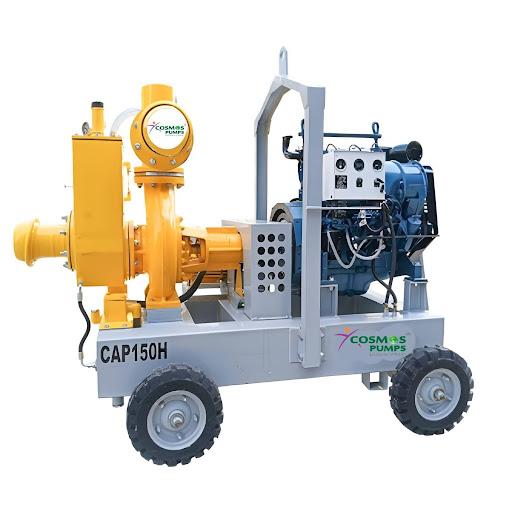
Priming is an essential requirement in many pumping systems, particularly those that draw liquid from a level below the pump inlet. The purpose of centrifugal pumps is to create a vacuum. But it will not work properly if any air gets into the suction line because it will not be able to make enough vacuum. This can result in total loss of flow or failure to operate entirely. The situation is often affected by the changing water levels in several applications and the intermittent operation of these pumps.
Self-priming pumps are specifically designed to address these challenges. They eliminate or significantly reduce the need for manual priming by automatically removing air from the suction line and restoring pumping action in industrial plants and construction sites. The design makes them especially suitable for environments where maintaining a fully flooded suction line is impractical.
How A Self-Priming Pump Prevents Airlock
Self-priming pumps are designed in such a way that they do not require external help in the management of the presence of air in the pumping system. They can blow out and preserve suction even when interrupted due to their internal structure.
What An Airlock Is and Why It Occurs
Airlock is the condition where the air is caught between the suction pipe or the pump casing, so that the liquid does not flow inside the impeller. The centrifugal pumps use liquid to create force, and therefore, the presence of air will cause a break in pressure development. Airlock usually occurs during the first startup, following maintenance processes, when the level of liquid source falls below the suction inlet, or when the suction lines are drained.
Read more - https://cosmospumps.com/self-priming-and-auto-prime-pumps-working-uses-and-advantages/

 English
 Arabic
 French
 Spanish
 Deutsch
 Turkish
 Dutch
Dutch
 Italiano
 Russian
 Romaian
 Portuguese (Brazil)
 Greek
Greek