
Fillers in Dubai: Nasolabial Fold Smoothing Guide 2026
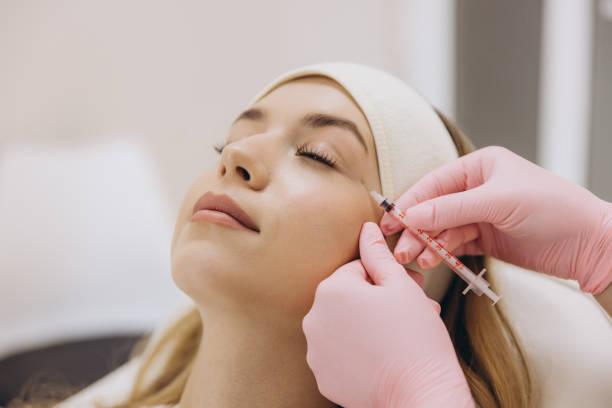
The nasolabial folds—the lines running from the corners of the nose to the mouth—are often the first place volume loss becomes visible. In 2026, the clinical approach to Fillers in Dubai has moved away from simply "filling the line." Modern practitioners now focus on "Lift Before Fill," recognizing that these folds are often caused by sagging cheeks rather than a lack of volume in the fold itself. By restoring the midface first, we achieve a more natural, "un-worked" appearance. In clinical settings, we observe that patients who receive structural support in the upper face require significantly less product in the folds, preventing the "puffy" look associated with older techniques.
The 2026 Strategy: Advanced Midface Support
To smooth laugh lines effectively, we analyze the facial structure in three dimensions.
-
Malar Support: Injections are placed deep on the cheekbone to pull the skin of the lower face upward, naturally softening the fold.
-
Piriform Aperture Filling: We target the deep space next to the nostril. Filling this "hollow" provides a foundational anchor that prevents the fold from deepening.
-
Micro-Droplet Integration: Once the lift is achieved, a soft, flexible Hyaluronic Acid (HA) is used in the fold itself to iron out any remaining surface lines.
-
Dynamic Rheology: We use fillers designed for high-movement areas, ensuring the product moves naturally when you smile and doesn't create a "shelf" effect.
How Much Pain is Actually Felt During the Procedure?
Is smoothing nasolabial folds painful?
The nasolabial area is less sensitive than the lips but more reactive than the cheeks. Patients typically rate the pain at a 3/10. The sensation is described as a "series of quick pinches" followed by a localized "heavy pressure" as the gel enters the tissue. Based on post-procedure follow-ups, the use of a blunt-tipped cannula—which requires only one entry point—has made the 2026 experience much more comfortable and significantly reduced the "stinging" sensation.
Who Should Reconsider Nasolabial Fold Fillers?
Are there safety concerns for laugh line treatments?
While safe, certain clinical factors may delay your treatment. If you have an active dental infection or have recently undergone a deep chemical peel, you should wait until the skin and underlying tissues have fully recovered. In clinical settings, we also screen for "heavy" nasolabial fat pads; if the fold is caused by excess fat rather than a hollow, adding filler may exacerbate the problem. Patients with a history of severe allergies to gram-positive bacterial proteins (used in HA production) must also be medically cleared before treatment.
Step-by-Step Patient Sensations: Recovery Timeline
The nasolabial area is prone to "expression-based" swelling, which follows a predictable path.
-
The First Hour: You will feel a "firmness" around the mouth. It may feel slightly strange to smile or talk as the local anesthetic is still active.
-
The First 24 Hours: This is the peak of "product awareness." You may feel the filler as a "soft ridge" under the skin. Patients often report it feels like they are "resting their face on a cushion."
-
Day 3–5: Any minor bruising or "yellowing" of the skin typically fades. In clinical settings, we find that icing the area helps the product "set" more comfortably during this phase.
-
Week 2: The filler becomes fully integrated. The "hard" feeling is replaced by natural skin texture, and the folds look like they did a decade ago.
Choosing the Right Product for Your Fold Depth
Which filler option is best for your smile lines?
-
For Shallow Lines: A soft, hydrating skin-booster or a low-density HA like Restylane Refyne.
-
For Deep Grooves: A more robust, lifting filler such as Juvederm Vollure or Stylage L.
-
For Long-Term Collagen Growth: Biostimulators like Radiesse, which encourage the skin to thicken its own foundation over time.
Why Choose Tajmeels Clinic for Natural Rejuvenation?
At Tajmeels Clinic, our 2026 protocol for Fillers in Dubai is built on the "Golden Ratio" of facial harmony. We specialize in the "Multi-Plane" injection technique, placing product at different depths to ensure your results look good from every angle. Our practitioners are experts in identifying the "danger zones" around the facial artery, using specialized ultrasound guidance when necessary to ensure 100% safety. By choosing Tajmeels Clinic, you are choosing a clinical environment where "subtle" is the standard and your natural expressions are always preserved.
Genuine Patient Perspectives
"I hated how my makeup always settled in my smile lines. At Tajmeels, they didn't just fill the lines; they lifted my cheeks first. The feeling was a bit 'tuffy' for the first few days, but now I can smile without those deep shadows. It’s a huge relief." — Layla
"I was worried I would look like a different person. The doctor at Tajmeels was so careful and used a cannula. I felt a little pressure, but no real pain. Two weeks later, I just look refreshed, like I’ve been drinking more water and sleeping better." — Zayed
Frequently Asked Questions
Will this change the way I smile?
No. In clinical settings, we use flexible fillers that move naturally with your facial muscles.
How long does nasolabial filler last?
Because this area moves frequently, results typically last 9 to 15 months depending on the product.
Can I have this done if I have dental implants?
Yes, but we advise waiting at least 4 weeks after any major dental work to ensure the area is free of inflammation.
Is there a risk of the filler "lumping"?
When injected correctly and massaged initially, the filler integrates smoothly. If a lump does occur, it can be easily dissolved.
Can I drink through a straw after the treatment?
We recommend avoiding "puckering" expressions like using a straw for the first 24 hours to let the filler stabilize.
What if my folds are very deep?
For severe cases, we may combine fillers with thread lifts or radiofrequency treatments for a more comprehensive lift.

 Arabic
 French
 Spanish
 Portuguese
 Deutsch
 Turkish
 Dutch
Dutch
 Italiano
 Russian
 Romaian
 Portuguese (Brazil)
 Greek
Greek