
Construction Loan for Commercial Property: Rates, Requirements, and Approval Process
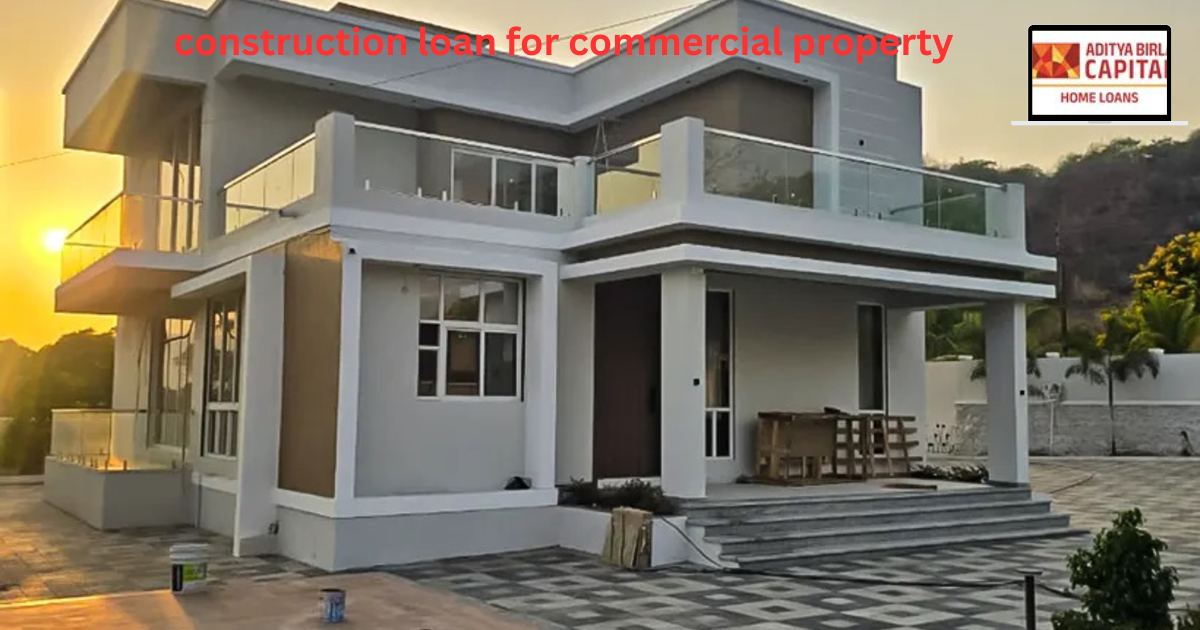
Developing a commercial property involves more than architectural planning and site execution. Financing plays a central role, especially during the construction phase when expenses are ongoing and revenue has not yet started. Materials, labor, permissions, and timelines all contribute to financial complexity. A construction loan for commercial property is structured to address this phase by providing funding that aligns with the actual progress of construction rather than the final completed value.
For developers and investors, understanding rates, requirements, and the approval process is essential to avoid delays and manage financial exposure effectively.
What Is a Commercial Construction Loan?
A commercial construction loan is a short- to medium-term financial facility used to fund the construction or major renovation of non-residential properties. These may include office buildings, retail centers, warehouses, industrial units, or mixed-use developments. Unlike long-term property loans, this type of loan is intended to support the project only during the construction period.
Funds are disbursed in stages, often referred to as tranches. Each tranche corresponds to a specific construction milestone. This staged structure ensures that funding is released in line with actual costs incurred on-site. A construction loan for commercial property is therefore closely monitored throughout the project lifecycle.
How Interest Rates Are Applied
Interest rates on construction loans are usually variable and linked to prevailing market conditions. Since construction projects involve execution risk, rates may differ from those applied to completed, income-generating properties. The final rate depends on several factors, including project feasibility, borrower credit profile, and estimated construction duration.
Interest is typically calculated only on the amount that has been disbursed, not on the total sanctioned limit. This approach helps manage borrowing costs during early stages of construction when only a portion of the loan has been utilized. Borrowers should still consider the impact of possible rate changes over time.
Typical Loan Tenure and Repayment Terms
The tenure of a commercial construction loan is generally aligned with the expected construction timeline. Most loans range from one to three years, depending on the scale and complexity of the project. Extensions may be considered if delays occur, but they often require updated documentation and reassessment.
During the construction phase, borrowers usually pay interest while principal repayment is deferred. Once construction is completed and the property becomes operational, the loan may be repaid or refinanced into a longer-term facility. This transition is an important part of overall project financial planning.
Requirements for a Construction Loan
Qualifying for a construction loan for commercial property involves meeting both borrower-level and project-level requirements. Lenders assess the financial stability, credit history, and experience of the borrower. Prior experience with similar projects is often viewed as an important factor.
Project-related requirements include clear land ownership or development rights, approved architectural plans, and necessary regulatory clearances. Detailed cost estimates and construction schedules are also required. Cash flow projections for the completed property help lenders assess long-term viability. Institutions such as Aditya Birla Capital follow structured assessment frameworks that focus on feasibility, compliance, and documentation accuracy.
Documentation Involved in the Process
The documentation required for a commercial construction loan is more extensive than that for standard lending products. Borrowers are typically asked to submit title deeds, zoning approvals, architectural drawings, and feasibility studies. Detailed budgets outlining material, labor, and contingency costs are also reviewed.
In addition, agreements with contractors, project timelines, and insurance coverage details may be required. Documentation is not limited to the application stage. Throughout the construction period, lenders often request progress reports and inspection certificates before releasing each tranche.
Approval and Disbursement Process
The approval process for a commercial construction loan begins with an initial review of the borrower’s profile and project proposal. Once preliminary criteria are met, lenders conduct detailed due diligence, including technical, legal, and financial evaluations.
After approval, the loan is structured into stages based on the construction plan. Disbursement occurs only after verification that a specific milestone has been completed. Site inspections and progress certifications are commonly used to confirm this. This process helps ensure that funds are used for their intended purpose and that the project remains on schedule.
Risk Factors and Monitoring
Construction projects are exposed to various risks, including cost overruns, delays, regulatory changes, and supply chain disruptions. A commercial construction loan structure is designed to manage these risks through staged funding and ongoing oversight.
Regular monitoring allows lenders and borrowers to identify issues early. From the borrower’s perspective, this oversight can support better cost control and timeline management. However, it also places responsibility on the borrower to maintain transparency and adhere to approved plans.
Choosing the Right Loan Structure
Not all commercial projects have identical financing needs. The right structure depends on factors such as property type, location, intended use, and exit strategy. For example, a project developed for leasing may require different cash flow assumptions than one intended for sale after completion.
A construction loan for commercial property should align with these objectives. Realistic timelines, conservative budgeting, and contingency planning can reduce financial strain during construction. Clear communication between borrower and lender is essential throughout the project.
Conclusion
Construction financing is a critical component of commercial property development. By offering staged disbursement, interest-only periods during construction, and structured monitoring, construction loans address the unique challenges of building non-residential assets.
Understanding how rates are applied, what requirements must be met, and how the approval process works allows borrowers to approach financing with greater clarity. A well-structured commercial construction loan supports disciplined execution, better risk management, and improved financial control from the start of construction to project completion.

 English
 Arabic
 French
 Spanish
 Portuguese
 Turkish
 Dutch
Dutch
 Italiano
 Russian
 Romaian
 Portuguese (Brazil)
 Greek
Greek