
Who Really Wins: 3rd-Party Delivery Apps or Your Own Rider App?
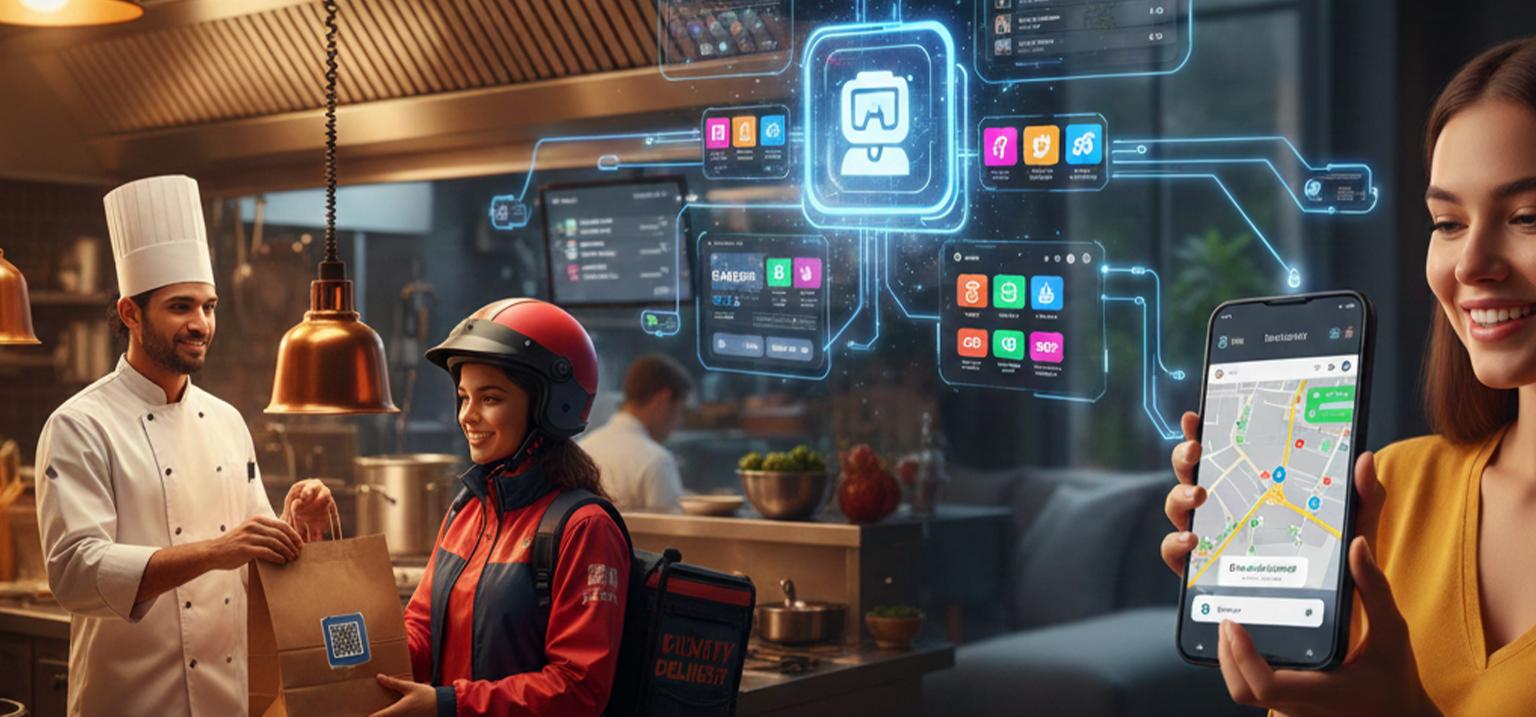
The restaurant delivery landscape has reached a critical turning point in 2025. Every restaurant owner must decide whether to continue paying steep commissions to third-party platforms or invest in their own delivery infrastructure.
This choice directly impacts your profit margins, customer relationships, and long-term business sustainability. The stakes have never been higher—with commission fees reaching up to 40% when all hidden costs are factored in.
Let's cut through the noise and examine what really works for your restaurant.
Understanding the True Cost of Third-Party Delivery Platforms
Third-party delivery apps connect your restaurant with customers through a single platform. Companies like DoorDash, Uber Eats, and Grubhub handle everything—from order placement to doorstep delivery.
But convenience comes at a price.
The Commission Structure Nobody Talks About
Most restaurant owners see the 15-30% commission rate and assume that's the full story. Industry research reveals a shocking truth: the actual cost can exceed 40% of your revenue.
Here's the complete breakdown:
- Base commission fees: 15-30% per order
- Payment processing fees: 2.9-3.5% additional
- Marketing fees: Extra charges for premium placement
- Small order fees: Additional costs for low-value orders
- Promotional costs: Discounts you're expected to fund
- Hidden adjustments: Various platform-specific charges
Real-world example: A customer orders $50 worth of food. With a 25% commission ($12.50), payment processing (3% = $1.50), and promotional costs ($3), you've lost $17 before accounting for food costs, labor, and packaging. Your actual profit? Potentially just a few dollars—or nothing at all.
According to recent industry analysis, when all fees are included, restaurants can lose more than 40% of their revenue per delivery order.
What You Gain from Third-Party Platforms
Despite the costs, these platforms offer tangible benefits:
Immediate Market Access: You tap into millions of active users from the very start. No need to build a customer base from scratch.
Zero Logistics Management: The platform handles driver recruitment, fleet operations, and route optimization. You focus entirely on food preparation.
Quick Setup: Most platforms integrate with your POS system within days. Menu synchronization happens automatically through their cloud-based infrastructure.
Built-in Marketing: Your restaurant appears in search results alongside competitors. The platform's promotional campaigns drive traffic to your listing.
The Hidden Costs That Destroy Your Margins
Brand Control: You're Invisible to Your Own Customers
When customers order through third-party apps, they're interacting with the platform's brand—not yours.
The customer experience problem: If delivery is late, food arrives cold, or there's an order mistake, customers blame your restaurant, even though you controlled nothing beyond food preparation.
Research shows that 43% of customers can't even recall the restaurant name after ordering through delivery apps. They remember the platform, not you.
Customer Data: The Most Valuable Asset You're Losing
Every order placed through third-party platforms belongs to them, not you.
This means:
- You can't build personalized marketing campaigns
- Customer ordering history remains invisible to you
- Loyalty programs become impossible to implement
- Direct communication channels don't exist
- Repeat orders build platform value, not yours
When customers want to reorder, they open DoorDash or Uber Eats—not your website. You're paying 25-30% per order to become invisible to your own customers.
Studies indicate that owning customer data increases lifetime value by 67% through direct marketing and loyalty programs.
The Reorder Rate Gap
- Third-party platform reorder rate: 15-25%
- Direct ordering reorder rate: 35-55%
That's a massive difference in customer retention. When you own the customer relationship, people come back more frequently and spend more per order.
Building Your Own Rider App: Taking Control
In-house delivery means you own every aspect of the customer experience. You build or license a white-label delivery app, hire your own drivers, and control every touchpoint from order to delivery.
The Investment Required
Building your own system requires upfront capital:
- White-label delivery software: Platform licensing or custom development
- Customer-facing app: iOS and Android applications
- Driver management system: Rider app and dispatch tools
- POS integration: Seamless connection with existing systems
- Payment gateway: Secure transaction processing
- Marketing launch: Customer acquisition campaigns
Most restaurants utilize white-label solutions to expedite deployment and minimize development costs.
What You Gain with Your Own Delivery System
Complete Brand Control Every interaction—from browsing your menu to tracking delivery—reinforces your brand identity. Customers recognize and remember YOU.
100% Revenue Retention A $30 order stays a $30 order. No commission fees. Over thousands of orders, these savings compound dramatically.
Direct Customer Relationships: You build a proprietary customer database for targeted promotions. CRM integration enables personalized marketing based on order history and preferences.
Customer Loyalty That Actually Matters. Data shows that 67% of consumers prefer ordering directly from a restaurant's own app or website over third-party platforms, citing lower costs and personalized rewards.
Operational Control: Delivery schedules align with your kitchen workflow. Order routing stays under your control. You set delivery radius, timing, and standards.
The Challenges of Managing Your Own Fleet
Let's be honest—running your own delivery operation isn't easy.
Driver Management
Recruiting reliable delivery drivers requires ongoing effort. Training ensures consistent service. Managing schedules, tracking performance, and handling complaints becomes a daily responsibility.
Logistics Complexity
Route optimization requires expertise and technology. Poor delivery planning leads to cold food, late deliveries, and frustrated customers.
Technical Maintenance
Your delivery software needs regular updates. Server hosting runs monthly. Bug fixes and feature improvements require developer resources.
Break-Even Timeline
For restaurants processing 300-500 monthly delivery orders, the break-even point typically arrives within 12-18 months. After that, every order contributes significantly more to your bottom line.
2025 Data: What the Numbers Really Say
Market Growth
The online food delivery market is projected to grow from $156.75 billion in 2024 to $173.57 billion in 2025—a 10.7% compound annual growth rate.
Commission Impact
A meal that earns you a 15% profit margin in-house can drop to a 7.6% loss once delivery app fees are added. That's not a small hit—it's devastating to your bottom line.
Customer Preferences
71% of consumers prefer using restaurant-specific apps over third-party platforms, citing benefits like lower costs, convenience, and personalized loyalty rewards.
Loyalty Program Impact
Restaurants with mature loyalty programs (3+ years) see 15-25% higher average order values compared to restaurants without loyalty capabilities.
Direct Ordering Advantage
Customers ordering directly through a restaurant's own system spend 35% more per transaction than those ordering through third-party apps.
Who Should Use Third-Party Delivery Apps?
Third-party platforms make sense in specific scenarios:
New Restaurants
When you're just starting, immediate customer access matters more than commission costs. The platform's existing user base drives early revenue while you perfect your operations.
Small Restaurants with Limited Capital
If you can't afford upfront investment in delivery infrastructure, third-party platforms provide instant access to delivery services without major capital requirements.
Testing New Markets
Before committing to full delivery infrastructure, validate demand using third-party aggregators. If orders prove profitable even after commissions, consider transitioning to your own system.
Thin Staffing Situations
When you lack resources for driver management, outsourcing delivery lets your team focus entirely on food preparation and kitchen operations.
Who Should Build Their Own Rider App?
In-house delivery becomes essential when:
Established Restaurants with Steady Volume
When daily orders exceed 30-50, commission fees become devastating. Your own system pays for itself within months, then generates pure savings.
Multi-Location Chains
Consistent brand control across locations strengthens market positioning. A centralized delivery system improves operational efficiency and scales with growth.
Restaurants with Strong Local Following
Your customer loyalty already exists. Convert it into direct orders through your own app. Data shows that loyalty programs can turn first-time customers into regulars, with tens of thousands enrolling when offered direct ordering benefits.
Premium Dining Establishments
Your customer experience standards exceed what third-party drivers typically maintain. Food quality preservation demands specialized training and delivery protocols.
The Hybrid Strategy: Maximum Flexibility
Many successful restaurants use both approaches simultaneously.
Maintain a presence on third-party platforms for customer discovery. Simultaneously, push customers toward your own app for repeat orders.
How this works:
- New customers discover you on DoorDash or Uber Eats
- First-time buyers receive discount codes for your direct app
- Repeat customers migrate to your platform, eliminating commission costs
- Acquisition happens on third-party platforms
- Retention happens through your owned channels
Real-world success: Ottavio's Italian Restaurant implemented their own branded mobile app and commission-free online ordering, resulting in $24,000 monthly in direct orders.
Step-by-Step: Launching Your Own Delivery System
Phase 1: Planning (Weeks 1-2)
- Calculate current annual commission fees
- Project 12-month order volume growth
- Research white-label delivery solutions within budget
- Define required features (GPS tracking, payment processing, customer app)
- Determine optimal delivery radius for your location
Phase 2: Technology Setup (Weeks 3-6)
- Select a white-label delivery platform provider
- Configure POS integration and menu synchronization
- Set up customer and driver mobile applications
- Implement payment gateway and security protocols
- Test order flow from placement to completion
- Configure analytics and reporting dashboards
Phase 3: Operations Launch (Weeks 7-8)
- Hire 3-5 delivery drivers initially
- Conduct comprehensive training on delivery protocols
- Establish scheduling system aligned with peak hours
- Design route optimization strategies
- Create customer service and feedback procedures
Phase 4: Marketing Rollout (Weeks 9-12)
- Announce direct ordering to existing customers
- Offer launch promotions (free delivery, discounts)
- Implement QR codes at tables and takeout counters
- Launch email and SMS marketing campaigns
- Promote benefits of direct ordering (lower prices, loyalty rewards)
Phase 5: Optimization (Month 4+)
- Analyze delivery metrics (time, accuracy, customer satisfaction)
- Refine operations based on performance data
- Scale driver fleet as volume increases
- Enhance app features based on user feedback
- Expand competitive advantages with exclusive offerings
Making Your Decision: Final Considerations
Calculate your commission drain: Add up what you paid in delivery commissions over the past 12 months. That's money that could fund your own system.
Project your order volume: How many delivery orders do you process monthly? Above 300-500 orders, your own system becomes economically compelling.
Assess customer loyalty: Do you have a strong local following? Direct ordering converts existing loyalty into higher profits.
Evaluate team capacity: Can you manage driver operations, or do you need to focus entirely on food preparation?
Consider long-term goals: Are you building a sustainable business or just surviving month-to-month?
Technology Requirements Checklist
Your delivery platform needs these core components:
Customer-Facing Features
- Mobile apps (iOS and Android)
- Web-based ordering portal
- Real-time order tracking
- Secure payment processing
- Order history and favorites
- Push notifications
Restaurant Management
- Order management dashboard
- Menu management and synchronization
- POS integration
- Kitchen display system integration
- Analytics and reporting
- Inventory tracking
Delivery Operations
- Driver mobile app
- Automated dispatch and routing
- Real-time GPS tracking
- Driver performance metrics
- Communication tools
- Delivery zone management
Real-World Case Study: The Hybrid Approach in Action
Saffron Kitchen's Success Story
A restaurant implemented a loyalty program encouraging direct website ordering instead of third-party apps. The result? Tens of thousands of customers enrolled in the program and began ordering directly from the site.
The Strategy:
- Maintained presence on delivery platforms for discovery
- Included promotional materials in delivery orders
- Offered loyalty rewards for direct ordering
- Gradually shifted repeat customers to owned channels
- Reduced third-party dependency while maintaining visibility
The Outcome: Lower customer acquisition costs, higher profit margins on repeat orders, and direct customer relationships that enabled personalized marketing.
The 2025 Reality: What's Changed
The restaurant delivery landscape has fundamentally shifted:
Consumer Preferences Are Changing
79% of consumers now have restaurant apps installed, and they're increasingly comfortable ordering directly from restaurants rather than through aggregators.
Loyalty Program Adoption
67% of all restaurants have launched loyalty programs, with adoption expected to reach 80% by the end of 2025. These programs drive repeat business and higher order values.
Commission Fee Regulations
Multiple U.S. cities have implemented commission caps to protect restaurants. This regulatory trend acknowledges the unfair power imbalance between platforms and restaurants.
Technology Accessibility
White-label delivery solutions have become more affordable and sophisticated. What once required massive investment now costs a fraction, making in-house delivery accessible to mid-sized restaurants.
Frequently Asked Questions
What percentage commission do third-party delivery apps charge restaurants?
Base commission rates typically range from 15-30% per order, but the true cost often exceeds 40% when including payment processing fees (2.9-3.5%), marketing fees, promotional costs, and hidden charges like small order fees.
How much does it cost to build your own delivery app?
White-label delivery solutions typically range from $2,000-10,000 in initial setup costs, plus monthly fees of $200-500 depending on features and order volume. Custom development costs significantly more ($50,000+) but offers complete customization.
What's the break-even point for in-house delivery systems?
For restaurants processing 300-500 monthly delivery orders, break-even typically occurs within 12-18 months. After that point, every order contributes more to your bottom line compared to third-party commissions.
Can I use both third-party apps and my own delivery system?
Absolutely—the hybrid model is increasingly popular. Use third-party platforms for customer discovery and initial orders, then incentivize repeat customers to order directly through your own app using loyalty rewards and exclusive offers.
How do I convince customers to order directly instead of using delivery apps?
Offer clear incentives: Lower prices (since you're not paying commissions), loyalty rewards, exclusive menu items, faster delivery, or better customer service. Make it genuinely beneficial for customers to order directly.
What's the most important metric to track when deciding?
Monthly commission fees as a percentage of delivery revenue. If you're paying more than 20% of your delivery revenue in commissions consistently, and processing 300+ monthly orders, your own system likely makes financial sense.
Do I need technical expertise to manage my own delivery app?
No—white-label solutions handle the technical complexity. You need operational management skills (driver scheduling, quality control), but the technology provider manages servers, updates, and technical maintenance.
How do loyalty programs impact customer retention?
78% of customers say they're more likely to return to a restaurant where they can earn rewards, even if it's less convenient. Loyalty programs are proven retention tools that increase order frequency and customer lifetime value.
Conclusion: Taking Control of Your Delivery Future
{
"@context": "https://schema.org",
"@type": "BlogPosting",
"headline": "Who Really Wins: 3rd-Party Delivery Apps or Your Own Rider App?",
"description": "<p class="MsoNormal" style="line-height:normal;"><span style="font-size:12pt;font-family:'Times New Roman', serif;">The restaurant delivery...",
"image": "https://uruboo.com/content/uploads/photos/2025/12/sngine_f988d65436ea07ab9fa23e64a4e005a6.jpg",
"author": {
"@type": "Person",
"name": "Cherry BerryRMS",
"url": "https://uruboo.com/cherryberryrms"
},
"publisher": {
"@type": "Organization",
"name": "Uruboo",
"url": "https://uruboo.com"
},
"datePublished": "2025-12-26 14:23:04",
"dateModified": "2025-12-26 14:23:04",
"mainEntityOfPage": {
"@type": "WebPage",
"@id": "https://uruboo.com/blogs/8779/Who-Really-Wins-3rd-Party-Delivery-Apps-or-Your-Own"
},
"url": "https://uruboo.com/blogs/8779/Who-Really-Wins-3rd-Party-Delivery-Apps-or-Your-Own",
"articleSection": "News",
"keywords": "#BrandedDelivery, #ThirdPartyDelivery, #HospitalityIndustry, #FutureOfFood, #AutomationInRestaurants",
"wordCount": "65535",
"commentCount": "",
"interactionStatistic": [{
"@type": "InteractionCounter",
"interactionType": "https://schema.org/CommentAction",
"userInteractionCount": ""
},
{
"@type": "InteractionCounter",
"interactionType": "https://schema.org/ViewAction",
"userInteractionCount": ""
}
]
}

 English
 French
 Spanish
 Portuguese
 Deutsch
 Turkish
 Dutch
Dutch
 Italiano
 Russian
 Romaian
 Portuguese (Brazil)
 Greek
Greek