
The Science of Silence and Precision: Why Pulsed Laser Technology is the Industrial Cleaning Revolution
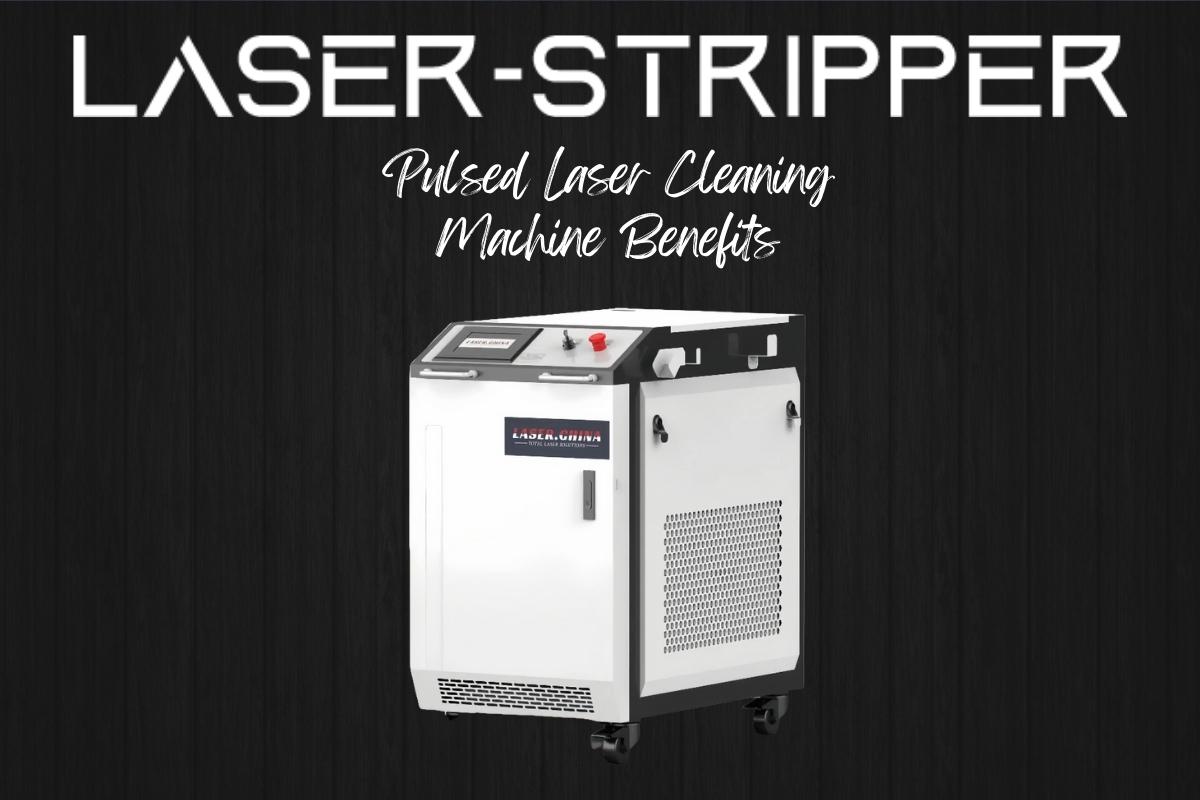
In the demanding world of industrial manufacturing and heavy-duty restoration, the search for the "perfect" cleaning method has been ongoing for decades. Traditional techniques like sandblasting, chemical stripping, and mechanical grinding have long been the industry standard, but they carry inherent flaws—surface abrasion, hazardous waste, and high labor costs. Today, the conversation has shifted toward a more sophisticated, non-contact solution: the pulsed laser cleaning machine.
The Pulsed Advantage: Power with Control
Not all lasers are created equal. While continuous-wave lasers provide a steady stream of energy, pulsed lasers deliver high-intensity bursts of light in nanoseconds. This distinction is critical for surface integrity. Each pulse creates a tiny, controlled explosion on the surface layer of rust, paint, or oil. This process, known as laser ablation, vaporizes the contaminant so quickly that the heat does not have time to transfer to the underlying metal.
By utilizing short pulses, operators can achieve a surgically precise clean without the risk of warping, melting, or "peening" the substrate. This makes pulsed technology the gold standard for high-precision industries like aerospace, mold manufacturing, and automotive restoration.
Unmatched Versatility Across Substrates
The beauty of a pulsed system lies in its adjustable parameters. A single machine can be tuned to handle a variety of tasks:
-
Oxide Removal: Clearing rust from carbon steel or oxide layers from aluminum to prepare for high-quality welding.
-
Selective Stripping: Removing a top coat of paint while leaving the factory primer intact for inspection.
-
Precision Degreasing: Removing industrial oils and carbon buildup from complex injection molds without changing the mold's dimensions.
A Sustainable and Safe Workspace
Beyond performance, the shift to laser cleaning is driven by environmental and safety regulations. Traditional cleaning is "dirty"—it produces piles of contaminated grit or barrels of toxic chemical sludge. In contrast, laser cleaning is a "dry" process. It requires no consumables and produces no secondary waste.
Most modern pulsed systems feature integrated extraction ports that capture vaporized particles at the source. This creates a dust-free environment, protecting the health of the operator and eliminating the logistical nightmare of hazardous waste disposal.
Portability for Modern Infrastructure
The evolution of fiber laser technology has allowed these machines to transition from massive stationary units to compact, portable systems. This mobility is a game-changer for maintaining large-scale infrastructure. Instead of dismantling a bridge section or transporting a ship's engine to a facility, the cleaning power is brought directly to the site. The ergonomic design of the handheld heads ensures that even complex geometries and tight corners can be cleaned with ease.
Conclusion
As we push toward "Industry 4.0," the tools of the past are being replaced by smarter, cleaner, and more efficient alternatives. The pulsed laser represents the pinnacle of surface maintenance technology, offering a return on investment through reduced labor, zero consumable costs, and superior finish quality. Whether you are preserving a piece of history or preparing a component for the future, laser technology is the clear path forward.

 English
 French
 Spanish
 Portuguese
 Deutsch
 Turkish
 Dutch
Dutch
 Italiano
 Russian
 Romaian
 Portuguese (Brazil)
 Greek
Greek