
Resistance Spot Welding: Principles, Applications, and Industrial Solutions
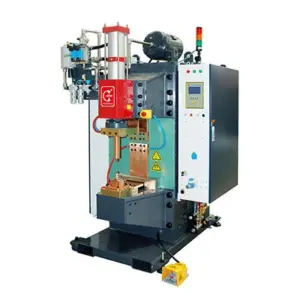
In modern manufacturing, resistance spot welding (RSW) remains a cornerstone technology for joining metal components efficiently, accurately, and reliably. From automotive assembly lines to heavy industrial equipment, RSW enables high-speed, repeatable, and cost-effective welding solutions. As a global leader in industrial welding and metal-joining equipment, Heron Welder provides advanced spot welding machines and automated solutions tailored to OEMs, manufacturing engineers, and factory integrators seeking superior quality and productivity.
In this guide, we will explain the fundamentals, applications, best practices, and how Heron’s solutions help factories achieve precision welding at scale.
What is Resistance Spot Welding?
Resistance spot welding is a fusion welding process in which metal surfaces are joined by applying pressure and electric current through electrodes. The current generates localized heat at the interface of the metal sheets, causing them to melt and form a weld nugget. The process is fast, energy-efficient, and ideal for thin to medium-gauge metal sheets.
Key Components of Resistance Spot Welding
-
Electrodes: Typically copper alloy, designed to conduct current and apply force.
-
Transformer or MFDC Power Supply: Provides the necessary current for rapid heating.
-
Control System: Ensures precise timing, current, and pressure for consistent weld quality.
-
Workpiece Clamping: Holds components securely to prevent misalignment during welding.
How Resistance Spot Welding Works
The spot welding cycle is simple but highly controlled:
-
Clamping: The electrodes press the metal sheets together.
-
Current Application: Electric current flows through the electrodes, generating heat via resistance at the contact surfaces.
-
Nugget Formation: The heat melts the metal, forming a small molten pool.
-
Cooling and Solidification: Current stops, pressure is maintained to allow the molten nugget to solidify, creating a strong weld joint.
Heron’s advanced spot welding machines utilize high-precision controls to regulate current, force, and weld duration, reducing defects and ensuring repeatable weld quality for industrial production.
Applications of Resistance Spot Welding
Resistance spot welding is widely used in industries that demand fast, reliable metal joining:
-
Automotive Manufacturing: Body panels, chassis components, and subassemblies.
-
Aerospace Components: Thin aluminum and steel assemblies for lightweight structural integrity.
-
Appliance Manufacturing: Stainless steel housings, frames, and enclosures.
-
Industrial Equipment: Metal cabinets, machinery parts, and storage systems.
With Heron’s customized RSW solutions, manufacturers can integrate spot welding stations into automated production lines, optimizing speed and consistency for high-volume manufacturing.
Advantages of Resistance Spot Welding
-
High Production Speed: RSW can join multiple spots in seconds, ideal for mass production.
-
Energy Efficiency: Concentrated heat minimizes energy consumption compared to other welding methods.
-
Minimal Distortion: Localized heating reduces warping or damage to surrounding areas.
-
Automation Compatibility: Easily integrated with robotic arms and production lines for fully automated operations.
Heron’s MFDC and capacitor discharge spot welding machines offer precise control over energy input, further improving weld quality and minimizing electrode wear.
Resistance Spot Welding vs. Other Welding Methods
| Feature | Resistance Spot Welding | MIG Welding | TIG Welding |
|---|---|---|---|
| Speed | Very fast | Moderate | Slow |
| Material Thickness | Thin to medium | Medium to thick | Thin to medium |
| Automation | Highly suitable | Limited | Limited |
| Distortion | Low | Moderate | Low |
| Energy Efficiency | High | Moderate | Low |
This comparison highlights why RSW remains the preferred choice for high-volume, automated metal joining in the automotive and manufacturing industries.
Best Practices for Optimized Spot Welding
-
Electrode Maintenance: Regularly dress and replace electrodes to maintain consistent heat and weld quality.
-
Material Preparation: Ensure clean, oxide-free metal surfaces to avoid weak welds.
-
Parameter Optimization: Adjust current, time, and pressure based on material type and thickness.
-
Automation Integration: Use robotic spot welding arms and conveyors for precise, repeatable weld placement.
-
Quality Inspection: Employ non-destructive testing, such as ultrasonic or peel tests, to monitor weld integrity.
Heron provides comprehensive consultation and training for engineers and production teams to implement these best practices effectively, maximizing machine lifespan and weld consistency.
Why Choose Heron for Resistance Spot Welding Solutions
Heron Welder is more than a machine manufacturer; we are a strategic partner for industrial welding automation. Our expertise includes:
-
Custom Spot Welding Machines: MFDC, capacitor discharge, and multi-gun configurations.
-
Automated Production Lines: Fully integrated robotic solutions for high-volume manufacturing.
-
Global Support & Service: Technical assistance, installation, and training worldwide.
-
Quality Assurance: Machines designed to meet ISO and OEM specifications.
Whether your factory is upgrading a single line or designing a new automated assembly, Heron delivers turnkey resistance spot welding solutions tailored to your production needs.
Frequently Asked Questions (FAQs)
1. What materials can be welded using resistance spot welding?
RSW works best on steel, stainless steel, and aluminum sheets, typically ranging from 0.5 mm to 5 mm thickness.
2. How fast is a resistance spot welding cycle?
Cycle times vary depending on material and thickness but typically range from 0.5 to 5 seconds per spot, making it ideal for high-volume production.
3. Can resistance spot welding be automated?
Yes. Robotic integration allows precise electrode placement, uniform pressure, and consistent welds across production lines.
4. What maintenance is required for RSW machines?
Electrodes require regular dressing and replacement. The power supply and control systems should also be periodically checked to maintain performance.
5. How does Heron ensure weld quality?
Heron machines feature precise control systems, quality monitoring, and optional integration with inspection sensors to ensure each weld meets OEM standards.
Conclusion: Partner with Heron for Expert Spot Welding Solutions
Resistance spot welding continues to be a critical technology in modern manufacturing, combining speed, efficiency, and reliability for metal joining applications. With Heron Welder’s advanced machines and automation expertise, factories and OEMs can achieve consistent high-quality welds, reduce downtime, and scale production efficiently.
Ready to optimize your production line? Contact Heron Welder today to request a quote or consult with our experts for customized resistance spot welding and automated metal-joining solutions tailored to your industrial needs.

 English
 Arabic
 French
 Spanish
 Deutsch
 Turkish
 Dutch
Dutch
 Italiano
 Russian
 Romaian
 Portuguese (Brazil)
 Greek
Greek