
The Evolution of Assembly Lines: From Manual to Automated Systems
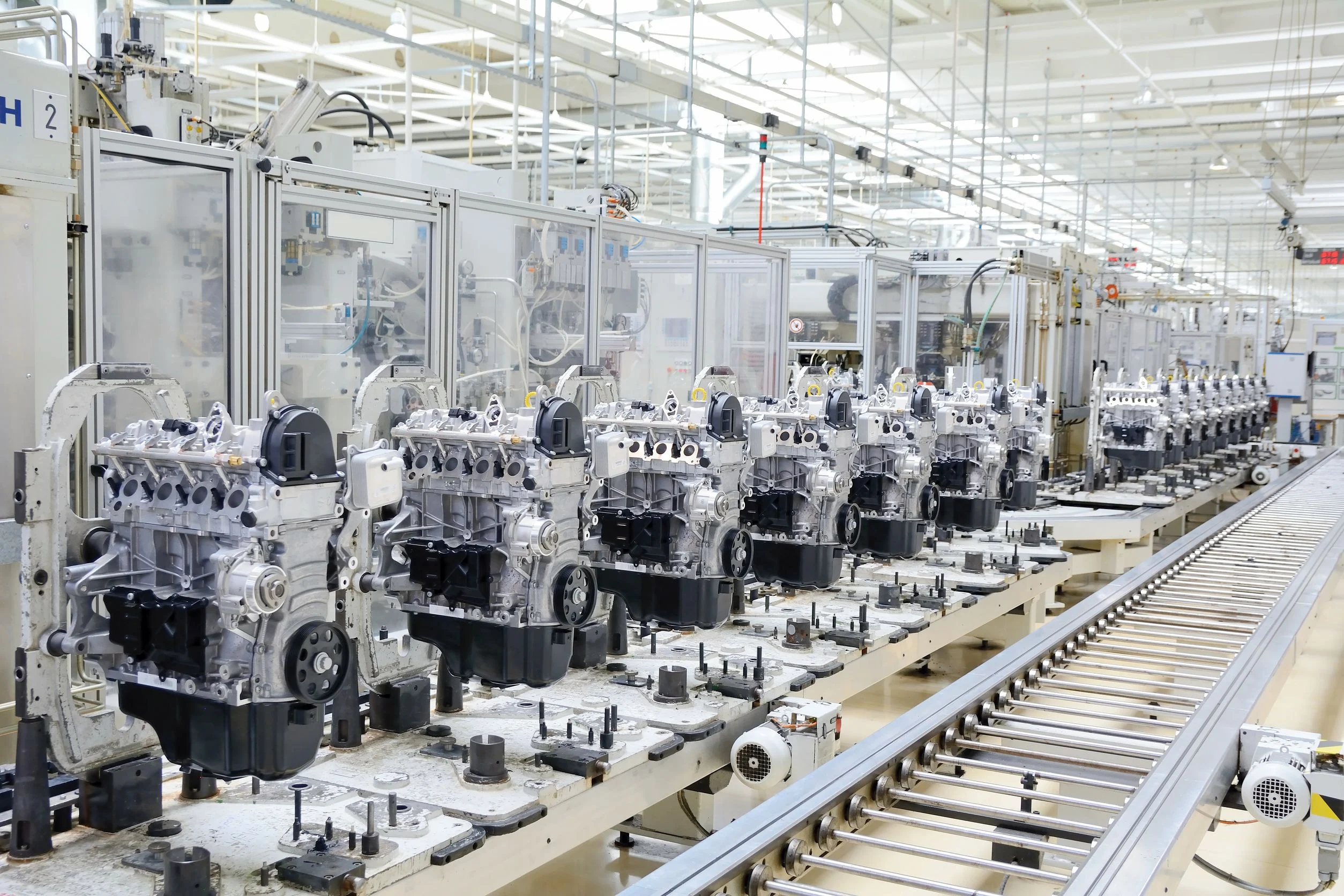
The history of assembly lines is a testament to the progress of manufacturing, as it has evolved from simple, manual labor-intensive systems to the highly automated and efficient operations we see today. The transformation of the assembly line over the years has dramatically increased production speed, lowered costs, and enhanced product quality. Whether you're a business owner, a manufacturer, or simply curious about industrial advancements, understanding how assembly lines evolved is key to appreciating modern manufacturing's efficiency.
To get a deeper dive into how assembly lines have changed over time, check out our comprehensive guide on Assembly Lines.
A Brief History of Assembly Lines
Assembly lines began as a solution to the growing need for mass production during the industrial revolution. Before this, products were made by skilled artisans, each creating individual items by hand. This process, though high in quality, was slow and inefficient. Manufacturers sought ways to speed up production without sacrificing quality.
The first major step in the evolution of assembly lines came with the introduction of Henry Ford’s moving assembly line in 1913. This revolutionary concept allowed for the mass production of automobiles, making products more affordable and accessible to the general public.
The Birth of the Manual Assembly Line
Before automation, assembly lines were completely manual. Workers would perform a single task repeatedly as products moved along the line. This method was introduced during the early 20th century in factories across the globe. The manual assembly line was labor-intensive, but it allowed for faster production than traditional methods.
For example, in Ford’s original assembly line, workers performed one task, such as attaching wheels or doors, and passed the product along to the next worker. The introduction of this system allowed Ford to reduce the time it took to produce a car from over 12 hours to just 2.5 hours.
However, manual assembly lines had limitations. They were slow, relied heavily on human workers, and were prone to errors or inconsistencies, especially with large production volumes.
The First Step Toward Automation
By the 1950s, manufacturers started exploring ways to reduce labor costs and increase efficiency. The first real move toward automation came with the introduction of pneumatic tools, which helped speed up some of the manual processes. Pneumatic tools, powered by compressed air, allowed workers to perform tasks like fastening bolts faster and with greater consistency.
During this period, the concept of automation wasn’t fully realized yet. The focus was still on improving the manual assembly process, but pneumatic tools and other mechanical advancements laid the groundwork for future automation.
The Rise of Automated Assembly Lines in the 1960s
The 1960s marked the beginning of automated assembly lines. In contrast to manual systems, these new systems employed machines that could perform repetitive tasks without human intervention. For example, conveyor belts were automated, allowing products to move continuously along the production line without human assistance. This significantly improved efficiency and speed.
With the help of robotic arms, the assembly of products became much faster. These robots could handle repetitive tasks such as welding, painting, and picking up heavy items, freeing up workers to focus on more intricate tasks that required human dexterity.
This era also saw the introduction of computer numerical control (CNC) machines, which enabled more precise and automated machining of parts. CNC machines could follow pre-programmed instructions to produce components with a level of accuracy that wasn’t possible with manual labor.
The 1980s: Flexible Manufacturing Systems (FMS)
In the 1980s, the concept of flexible manufacturing systems (FMS) emerged, marking a key step in the evolution of assembly lines. FMS allowed for greater flexibility in manufacturing by enabling machines to be quickly reconfigured for different production needs. This innovation made assembly lines more versatile, allowing manufacturers to produce multiple products on the same line without significant downtime.
At this point, the assembly line was no longer just a fixed system for mass production; it was becoming more adaptable, which allowed companies to respond quickly to changes in market demand. This shift paved the way for more customized and varied production runs, rather than the traditional single-product focus of earlier systems.
The 1990s: The Age of Robotics and Advanced Automation
By the 1990s, robots and other automated systems were being integrated into virtually every stage of the assembly line process. Industrial robots had become commonplace in factories, performing tasks like welding, assembly, and painting with incredible precision and efficiency. The introduction of machine vision systems allowed robots to “see” and inspect products, ensuring high-quality standards without human oversight.
One of the major benefits of robots during this period was their ability to work in dangerous environments or handle hazardous materials, thereby improving worker safety. This shift also reduced labor costs and increased production output.
The 2000s: Smart Manufacturing and the Internet of Things (IoT)
The 2000s saw the rise of smart manufacturing, where assembly lines became interconnected through advanced sensors and data analytics. This period marked the beginning of the Internet of Things (IoT), where machines, sensors, and computers communicate with each other in real-time. This connectivity allowed for more precise monitoring and optimization of the entire production process.
Manufacturers began to collect vast amounts of data on production efficiency, machine health, and product quality. By analyzing this data, companies could predict maintenance needs, identify inefficiencies, and make data-driven decisions to further optimize their assembly lines.
This period also witnessed the development of augmented reality (AR) for assembly line workers. AR technology could display instructions or information directly onto a worker’s field of view, improving task accuracy and reducing training time.
The Present: Fully Automated and Autonomous Systems
Today, we are seeing the emergence of fully automated and autonomous assembly lines. With the latest advancements in artificial intelligence (AI) and machine learning (ML), assembly lines are capable of self-monitoring, self-adjusting, and even adapting to changes in production requirements without human intervention. AI algorithms analyze production data in real time to make decisions that optimize workflow, reduce waste, and improve overall efficiency.
Robots now work alongside human employees in a collaborative environment known as cobots (collaborative robots). These cobots are designed to work safely and effectively alongside people, assisting with tasks that require precision, lifting, or even providing direct support during assembly.
The use of autonomous mobile robots (AMRs) is becoming more widespread, helping to transport materials and parts across the factory floor, further reducing manual labor and improving efficiency.
The Future of Assembly Lines: Industry 4.0 and Beyond
As we move toward Industry 4.0, the future of assembly lines looks increasingly intelligent and interconnected. 3D printing (additive manufacturing) is expected to revolutionize the production process by allowing companies to produce components on-demand, reducing material waste and lead times.
Artificial intelligence, big data, and blockchain technology are set to play crucial roles in further enhancing assembly line systems. By leveraging these technologies, manufacturers will be able to create highly customizable and flexible production lines that can easily adapt to rapidly changing market demands.
The goal of the future assembly line will be to create a system that is fully integrated, efficient, and capable of producing high-quality products with minimal human input.
Conclusion
The evolution of assembly lines has been a remarkable journey, from the early days of manual labor to the cutting-edge automation of today’s systems. As manufacturing continues to advance with new technologies, the future of assembly lines will be more connected, intelligent, and adaptable than ever before.

 English
 Arabic
 French
 Spanish
 Portuguese
 Deutsch
 Turkish
 Dutch
Dutch
 Russian
 Romaian
 Portuguese (Brazil)
 Greek
Greek