
Chemical Peels in Dubai: Glycolic vs Salicylic Peels
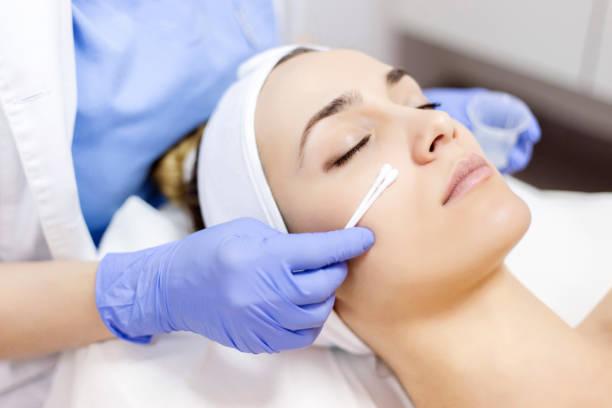
The choice between a Glycolic or Salicylic acid treatment is the most frequent clinical debate for patients seeking Chemical Peels in Dubai. While both are hydroxy acids, they operate on entirely different biological pathways. In clinical settings, we observe that the primary difference lies in their solubility: one is water-soluble and excels at surface rejuvenation, while the other is oil-soluble and focuses on deep pore detoxification. Choosing the wrong acid for your skin type can lead to either lackluster results or unnecessary irritation. Understanding how these acids interact with the Dubai climate—where heat and humidity often increase sebum production—is essential for a successful skin transformation.
What is the Difference Between AHA and BHA?
In clinical settings, we categorize these acids based on their molecular structure and their "target zone" within the skin.
-
Glycolic Acid (AHA): An Alpha Hydroxy Acid with the smallest molecular size in its group. It penetrates deeply to dissolve the "glue" between dead skin cells, making it the gold standard for anti-aging and texture.
-
Salicylic Acid (BHA): A Beta Hydroxy Acid that is lipophilic (oil-attracted). It can bypass the skin’s natural oils to enter the follicle, making it the superior choice for acne and congestion.
-
Surface vs. Pore: Glycolic works on the "roof" of the skin, while Salicylic works inside the "pipes" (pores).
-
Hydration vs. Mattification: In clinical settings, we observe that Glycolic helps the skin retain moisture, whereas Salicylic is designed to reduce excess oil.
Which Acid is Right for Your Specific Skin Concern?
The "ideal" acid is determined by your primary skin goal and your skin’s tolerance for activity.
| Feature | Glycolic Acid (AHA) | Salicylic Acid (BHA) |
| Best For | Fine lines, sun damage, dullness | Active acne, blackheads, oily skin |
| Skin Type | Normal, dry, or aging skin | Oily, combination, or acne-prone |
| Solubility | Water-soluble | Oil-soluble |
| Sensation | Prickly, "spicy" tingle | Fizzy, "itching" warmth |
What are the Real Patient Sensations During the Procedure?
Based on post-procedure follow-ups, the "feeling" of the peel application varies significantly between these two acids.
-
Glycolic Application: Patients often describe a "sharp" prickling sensation. It feels like tiny, hot needles for about 2–3 minutes.
-
Salicylic Application: This acid often creates a "fizzy" feeling. As it evaporates, it can leave a white "pseudofrost" on the skin, which feels very tight and warm.
-
The Neutralization: Glycolic peels must be neutralized with a base to stop the reaction. You feel an instant cool "rush" when this happens.
-
The Self-Neutralizer: Many Salicylic peels are self-neutralizing. You will feel the heat peak and then slowly fade on its own as the acid dries.
What are the Realistic Recovery Expectations?
Which Peel Has More Visible Peeling?
In clinical settings, we observe that Salicylic acid typically causes more visible, "flaky" peeling, especially in oily areas. Glycolic acid often results in "micro-peeling" that is barely visible to the naked eye but results in a significant "glow."
-
Glycolic Recovery: Expect a slight flush for 24 hours followed by extreme smoothness. It is often called the "Lunchtime Peel" because there is zero social downtime.
-
Salicylic Recovery: Expect 3 to 5 days of dryness and localized flaking, especially around the nose and mouth. This is the skin’s way of purging the cleared-out pores.
Who Should Choose Glycolic Over Salicylic?
Are There Specific Contraindications?
Safety depends on your skin barrier health and any underlying allergies.
-
Aspirin Allergy: Patients with an allergy to aspirin must avoid Salicylic acid, as they are chemically related (salicylates).
-
Sensitive/Dry Skin: If your skin is prone to redness or eczema, a gentle Glycolic or Lactic acid is much safer than a drying Salicylic peel.
-
Pregnancy: In clinical settings, low-strength Glycolic is often considered safe, while high-strength Salicylic is generally avoided during pregnancy.
-
The "Glow" Seeker: If you have an event in 2 days and just want your skin to look "glass-like," Glycolic is your best clinical option.
Real Patient Experiences
"I have very oily skin and huge pores. The Salicylic peel at Tajmeels felt a bit itchy, but for the first time in years, my nose is actually clear of blackheads." — Faisal
"I’m more concerned about my fine lines and sunspots. The Glycolic peel made my skin tingle for a few minutes, but the glow I had the next day was incredible." — Maya
Why Choose Tajmeels Clinic for Your Acid Selection?
At Tajmeels Clinic, we don't believe in a "standard" Glycolic or Salicylic treatment. Our Senior Practitioners specialize in "Hybrid Peeling." This means we can apply a Salicylic acid to your oily T-zone while using a hydrating Glycolic or Lactic acid on your drier cheeks. This "Zonal Approach" ensures every inch of your face receives exactly what it needs without over-processing delicate areas. By choosing Tajmeels, you are choosing a clinical environment that understands the chemistry of acids and the unique needs of your skin, providing a truly customized path to clear, youthful skin.
FAQs About Glycolic and Salicylic Peels
Can I mix both acids in one session?
In clinical settings, we often use "pre-mixed" professional cocktails that contain both, but we do not recommend layering them separately unless done by a professional.
Which one is better for "Maskne"?
Salicylic acid is the superior choice for Maskne as it kills the bacteria trapped by your mask and clears the clogged pores.
Will Glycolic acid help with my acne?
It can help with the marks left by acne, but it isn't as effective as Salicylic at stopping active breakouts.
Does Salicylic acid help with wrinkles?
It has some anti-aging benefits, but Glycolic is much more effective at stimulating the collagen needed to fill fine lines.
Is it safe to do these in the Dubai sun?
Both acids make you more sun-sensitive. You must wear SPF 50+ and avoid direct sun for at least 7 days post-treatment.
How many sessions do I need?
For both acids, a series of 4 to 6 sessions spaced 3 weeks apart is the clinical standard for achieving long-term results.

 English
 Arabic
 French
 Portuguese
 Deutsch
 Turkish
 Dutch
Dutch
 Italiano
 Russian
 Romaian
 Portuguese (Brazil)
 Greek
Greek