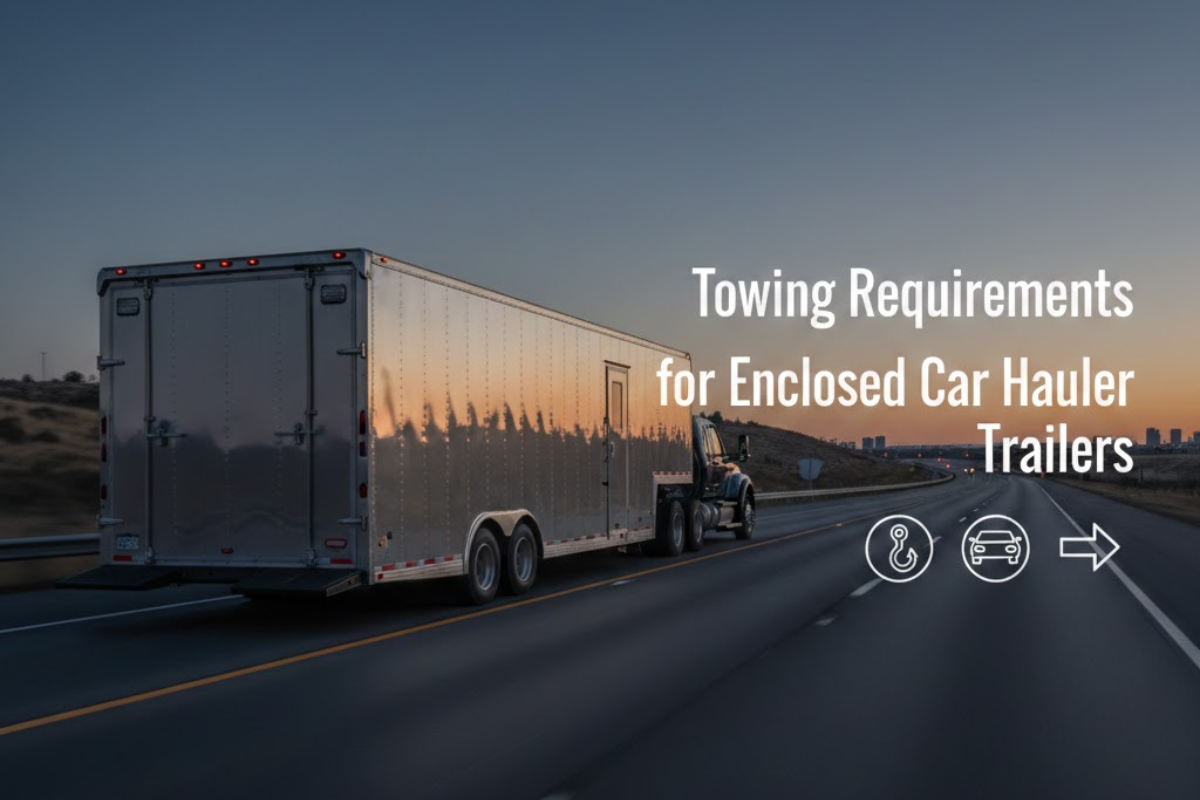
Buying an enclosed trailer feels exciting at first. Shiny aluminum sides. Clean interior walls. That fresh plywood smell. Then reality hits when you realize towing a car hauler enclosed trailer isn’t the same as pulling a small utility trailer from the hardware store.
It’s heavier. Taller. More demanding.
And if you don’t match the right tow vehicle with the right enclosed car hauler trailer, things can get uncomfortable pretty quickly.
Let’s talk about what actually matters before you hook one up and hit the road.
Know Your Trailer Weight (Loaded, Not Empty)
This is where people mess up.
They look at the empty weight of the enclosed car trailer for sale and think, “My truck can handle that.” Sure. Maybe.
But what about:
-
The car inside?
-
Spare tires?
-
Toolboxes?
-
Fuel cans?
-
Extra equipment?
An enclosed car hauler trailer might weigh 2,500–3,500 pounds empty. Add a vehicle at 3,000–4,000 pounds, plus gear, and suddenly you’re towing 7,000 pounds or more.
Always look at:
And compare that to your truck’s towing capacity — not the marketing number, but the actual number for your specific trim and drivetrain.
It’s not fun learning this the hard way on a steep grade.
Matching the Tow Vehicle
Half-ton truck? Three-quarter-ton? SUV?
A lightweight enclosed car trailer for small cars might be manageable for certain SUVs rated for 7,000–8,000 pounds. But a 20 ft enclosed car hauler loaded with a muscle car? That’s truck territory.
You’ll want:
Heat is the enemy when towing heavy enclosed trailers. That transmission works hard. I’ve smelled burnt transmission fluid once on a long uphill stretch. Would not recommend.
Hitch Type Matters More Than You Think
Not all hitches are equal.
Common options include:
Most enclosed car hauler trailers use a bumper pull configuration with a 2-5/16” ball. But once weight climbs, a weight distribution hitch becomes almost necessary.
It shifts some of the tongue weight forward onto the front axle of your tow vehicle. That improves steering control and braking stability.
Without it? The front end can feel light. Floaty. Not a nice feeling at highway speeds.
Tongue Weight and Balance
Tongue weight should typically be around 10–15% of the trailer’s total weight.
Too little weight on the hitch causes sway. Too much overloads the rear suspension.
Loading the car inside the enclosed auto transport trailer correctly makes a huge difference. Position the vehicle slightly forward of center so weight sits properly over the axles.
I’ve seen someone load their car too far back once. The trailer started swaying around 60 mph. They pulled over fast. Smart move.
Sway isn’t something you “wait and see” about.
Trailer Brakes Are Not Optional
Most enclosed car hauler trailers above 3,000 pounds require trailer brakes. In many states, it’s legally required.
Electric brakes are common. You’ll need:
Test your brake controller before long trips. Empty parking lot. Low speed. Make sure the trailer brakes engage smoothly.
If the trailer is pushing your truck during stops, something’s wrong.
Tire Ratings and Pressure
Enclosed car trailers are heavier than open trailers. Their tires must handle the load.
Check:
Underinflated tires build heat. Heat causes blowouts. Blowouts on enclosed car hauler trailers can cause serious damage to the trailer’s side panels — and potentially your vehicle inside.
It takes two minutes to check pressure. Do it.
Height and Wind Resistance
Enclosed trailers catch wind like sails.
You’ll notice it immediately compared to an open car hauler trailer.
Crosswinds push hard. Passing semis create suction. Fuel mileage drops noticeably.
And height matters for clearance. Many enclosed car transport trailers are 7 feet tall inside. Add roof height and ground clearance, and you’re approaching 9–10 feet overall.
Watch:
It sounds obvious until you forget once.
Mirrors and Visibility
Standard side mirrors may not cut it when towing a wide enclosed car hauler.
Extended tow mirrors improve visibility and lane awareness. Some drivers add clip-on extensions if their truck doesn’t have factory tow mirrors.
Blind spots increase significantly with enclosed trailers. Lane changes require patience and planning.
Quick movements? Not a good idea.
Registration and Legal Requirements
Depending on your state, enclosed car hauler trailers may require:
-
Separate registration
-
Insurance coverage
-
Weight-based licensing
Commercial use introduces additional requirements. If you’re transporting vehicles for business, regulations change.
Always confirm local towing laws before purchasing an enclosed car hauler for sale.
Nobody enjoys fines at roadside inspections.
Proper Tie-Down Systems
Inside the enclosed auto hauler trailer, your vehicle must be secured properly.
Use:
Never rely solely on parking brakes.
Movement inside the trailer can throw off balance and create dangerous weight shifts. Even small shifts matter at highway speeds.
I always double-check straps after the first 20–30 miles. Things settle. Straps loosen slightly. It happens.
Routine Maintenance for Safe Towing
Towing heavy enclosed car trailers regularly means staying ahead of wear.
Inspect:
-
Wheel bearings
-
Brake pads
-
Wiring connections
-
Suspension components
-
Door latches
Enclosed trailers vibrate constantly during transport. Fasteners loosen over time.
A simple maintenance schedule prevents expensive surprises.
Practice Before Long Trips
If you’re new to towing an enclosed car hauler trailer, practice in an empty lot.
Back up slowly. Learn how it responds. Get comfortable with wider turns.
Backing an enclosed trailer feels different than open ones. You can’t see through it. No rear window visibility. You rely entirely on mirrors.
It takes practice. And patience.
Towing an enclosed car hauler isn’t complicated once you understand the requirements. It just demands attention.
Match the right tow vehicle. Balance the load properly. Maintain brakes and tires. Respect the extra height and weight.
Do that, and towing becomes predictable. Even enjoyable in a strange way.
There’s something satisfying about hauling a vehicle safely across miles of highway, knowing everything behind you is secure.
Just don’t skip the prep work. That’s where most problems start.


 English
 Arabic
 French
 Spanish
 Portuguese
 Deutsch
 Dutch
Dutch
 Italiano
 Russian
 Romaian
 Portuguese (Brazil)
 Greek
Greek