
Why Optical Testing Needs a Conoscope Lens for Angle Analysis
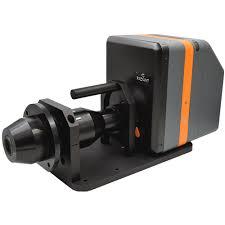
In display testing, optical labs, and light analysis systems, engineers must measure how light behaves at different angles. This includes brightness, polarization, and light distribution. Standard lenses cannot capture this wide angular information accurately.
This is where a conoscope lens becomes essential. It is specially designed to observe and analyze light from many angles at once.
What Is a Conoscope Lens?
A conoscope lens is a specialized optical lens used to observe the angular distribution of light. It converts angle information into a visible image that can be measured and analyzed.
Optical Design and Structure
This lens is designed with:
-
Precisely curved optical surfaces
-
High-quality optical glass
-
Wide-angle field design
-
Accurate focal structure
These features allow it to gather light from many directions.
How It Captures Angular Light Information
Instead of focusing on a single direction like a normal lens, this lens collects light across a wide angle and maps it into a measurable pattern. This helps engineers study light behavior in detail.
Problems with Standard Lenses in Light Angle Measurement
Using convex or concave lenses for angular measurement leads to errors.
Narrow Field of View
Regular lenses capture light from a limited angle. This prevents full analysis of light spread.
Inaccurate Polarization and Distribution Results
Without proper angle mapping, measurements of brightness and polarization become unreliable.
How Conoscope Lens Solves These Measurement Challenges
The conoscope lens is built specifically for angle-based observation. It provides:
-
Wide field angle capture
-
Accurate light mapping
-
Reliable polarization study
-
Consistent measurement results
This improves testing accuracy in labs and production lines.
Key Features Important for Engineers and Manufacturers
Engineers prefer this lens because it offers:
-
Wide angular field of view
-
High optical clarity
-
Precision polishing
-
Stable measurement performance
-
Compatibility with testing equipment
-
Long-term reliability
These features are critical for quality testing.
Conoscope Lens vs Standard Optical Lens
| Feature | Conoscope Lens | Standard Optical Lens |
|---|---|---|
| Angular Light Capture | Very Wide | Narrow |
| Polarization Study | Accurate | Limited |
| Measurement Reliability | High | Moderate |
| Field of View | Wide | Small |
| Optical Testing Suitability | Excellent | Poor |
Real Applications in Display Testing and Optical Labs
This lens is widely used in:
-
LCD and OLED display testing
-
AR/VR display analysis
-
Optical research labs
-
Polarization measurement systems
-
Light distribution testing devices
It is essential where angle-based light analysis is required.
Why Manufacturers Prefer Conoscope Lens
Manufacturers choose the conoscope lens because it improves testing accuracy and product quality. It helps detect display and optical issues early in production.
This reduces defects and improves performance consistency.
How to Choose the Right Conoscope Lens
When selecting a conoscope lens, consider:
-
Required angular field range
-
Lens diameter and focal length
-
Material quality
-
Surface precision
-
Compatibility with sensors and cameras
Proper selection ensures accurate measurements.
Conclusion
Measuring how light behaves at different angles is important in display testing and optical research. Standard lenses cannot provide the required angular data. Conoscope lenses solve this problem with a wide field design and precise optics.
Because of their accuracy and reliability, they have become an essential tool in optical labs, display manufacturing, and research environments.

 English
 Arabic
 French
 Spanish
 Portuguese
 Deutsch
 Turkish
 Dutch
Dutch
 Italiano
 Romaian
 Portuguese (Brazil)
 Greek
Greek