
How an ID Card Printer Simplifies Secure Identity Management for Modern Organizations
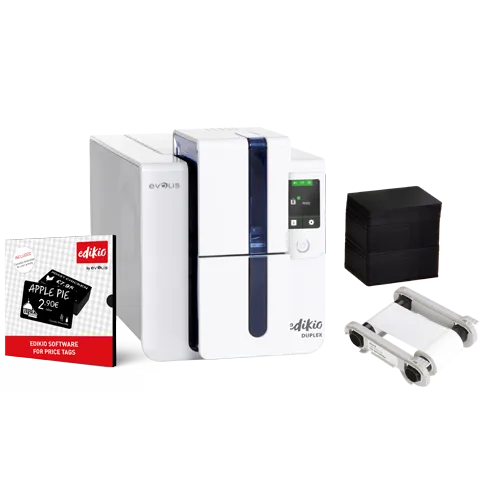
In today’s digital-first world, organizations still rely heavily on physical identification to manage access, verify identity, and maintain security. From corporate offices and educational institutions to healthcare facilities and event venues, accurate identification is essential for smooth operations. This is where an id card printer becomes a powerful and practical solution.
Modern organizations are moving away from outsourced ID production and adopting in-house systems that are faster, safer, and more cost-effective. A dedicated printer for id card printing not only streamlines daily workflows but also strengthens security and compliance. This article explores how an identity card printer simplifies identity management while reducing risks and operational delays.
What Is an Identity Card Printer and How Does It Work?
An identity card printer is a specialized device designed to print durable, professional-quality ID cards. Unlike standard office printers, it prints directly onto plastic cards (usually PVC or composite materials), producing long-lasting and tamper-resistant identification.
The process typically includes:
-
Designing the card using ID software
-
Feeding blank cards into the printer
-
Printing text, images, and security elements
-
Optional encoding of magnetic stripes, RFID, or smart chips
Most modern ID systems allow organizations to customize layouts, add logos, and store employee or student data securely. This makes an id card printer an essential tool for organizations that need accuracy, speed, and control.
Differences Between Regular Printers and Printers for ID Card Printing
A common misconception is that ID cards can be printed using standard inkjet or laser printers. While this may work for temporary paper badges, it is not suitable for secure or long-term identification.
Here’s how a printer for id card printing differs from a regular printer:
Material Compatibility
Standard printers work with paper, while ID printers are built to handle plastic cards that resist wear and tear.
Print Durability
ID card printers use thermal transfer or dye-sublimation technology, producing prints that won’t smudge or fade easily.
Security Capabilities
An identity card printer supports advanced security features such as encoded chips, UV printing, and overlays—features unavailable in regular printers.
Professional Appearance
Dedicated ID printers deliver consistent color, sharp text, and photo clarity that meet professional and regulatory standards.
These differences make ID card printers a necessity rather than a luxury for modern organizations.
Practical Use Cases Across Industries
One of the biggest advantages of owning an id card printer is its versatility. It supports a wide range of applications across multiple sectors.
Corporate Offices
Employee ID cards help manage access control, improve workplace security, and reinforce brand identity.
Educational Institutions
Schools and universities use ID cards for students, faculty, and staff, often integrating them with library systems, attendance tracking, and cashless payments.
Healthcare Facilities
Hospitals rely on accurate identification to protect patient data, control access to restricted areas, and distinguish staff roles.
Visitor and Contractor Management
Temporary badges printed on demand improve safety while maintaining a professional environment.
Membership and Events
Gyms, clubs, and event organizers use ID cards to manage memberships and authenticate attendees efficiently.
In all these cases, a reliable printer for id card printing ensures fast turnaround without compromising accuracy.
Security Features That Protect Against Fraud
Security is one of the strongest reasons organizations invest in an identity card printer. Modern systems support multiple layers of protection, making ID cards difficult to duplicate or manipulate.
Common security features include:
Holograms and Overlays
These visual elements make counterfeiting immediately noticeable.
Barcodes and QR Codes
Used for scanning, access control, and database integration.
Magnetic Stripes
Store encoded data for authentication and access systems.
Smart Cards and RFID
Enable contactless access, time tracking, and system integration.
UV Printing and Microtext
Hidden features that can only be verified with special tools.
By producing secure credentials internally, organizations maintain full control over who receives access and when.
Why In-House ID Card Printing Saves Time and Reduces Risks
Outsourcing ID card production can introduce delays, security concerns, and ongoing costs. Bringing the process in-house with an id card printer offers clear operational advantages.
Faster Issuance
New hires, students, or visitors can receive their IDs instantly without waiting days or weeks.
Improved Data Security
Sensitive personal information stays within the organization, reducing the risk of data leaks.
Cost Efficiency Over Time
While the initial investment exists, in-house printing eliminates recurring outsourcing fees.
Instant Updates and Replacements
Lost, damaged, or updated cards can be reissued immediately.
Greater Control and Compliance
Organizations can enforce consistent branding, access rules, and compliance standards.
A dependable printer for id card printing becomes a long-term asset rather than a recurring expense.
Supporting Modern Identity Management Strategies
As organizations grow and adopt hybrid work models, identity management must remain flexible and secure. An identity card printer supports this by integrating with access control systems, HR platforms, and security software.
Whether issuing permanent credentials or temporary passes, ID printers ensure organizations remain agile, compliant, and protected.
Final Thoughts
Secure identity management is no longer optional—it is a foundational requirement for modern organizations. Investing in an id card printer allows businesses, schools, and institutions to issue professional, secure identification quickly and efficiently. Compared to standard printers, a dedicated printer for id card printing delivers durability, security, and control that paper-based solutions simply cannot match.
By bringing ID production in-house, organizations reduce risk, save time, and gain complete oversight of their identity systems. In an era where security and efficiency go hand in hand, an identity card printer is a smart, future-ready investment.

 English
 Arabic
 French
 Spanish
 Portuguese
 Deutsch
 Dutch
Dutch
 Italiano
 Russian
 Romaian
 Portuguese (Brazil)
 Greek
Greek