
Rubber Calendering Explained: A Critical Step in Industrial Rubber Manufacturing
Industrial rubber products are used in applications where accuracy, durability, and consistency are essential. While processes like rubber moulding often receive the most attention, another manufacturing step plays an equally important role in many applications: rubber calendering.
Rubber calendering is a specialised process used to create smooth, uniform rubber sheets and coatings that meet precise thickness and surface requirements. In modern industrial rubber manufacturing, calendering works alongside rubber moulding to deliver components that perform reliably in demanding environments.
This article explains what rubber calendering is, how it differs from rubber moulding, where it is used, and why quality control is so important in this process.
What Is Rubber Calendering and How Does It Work?
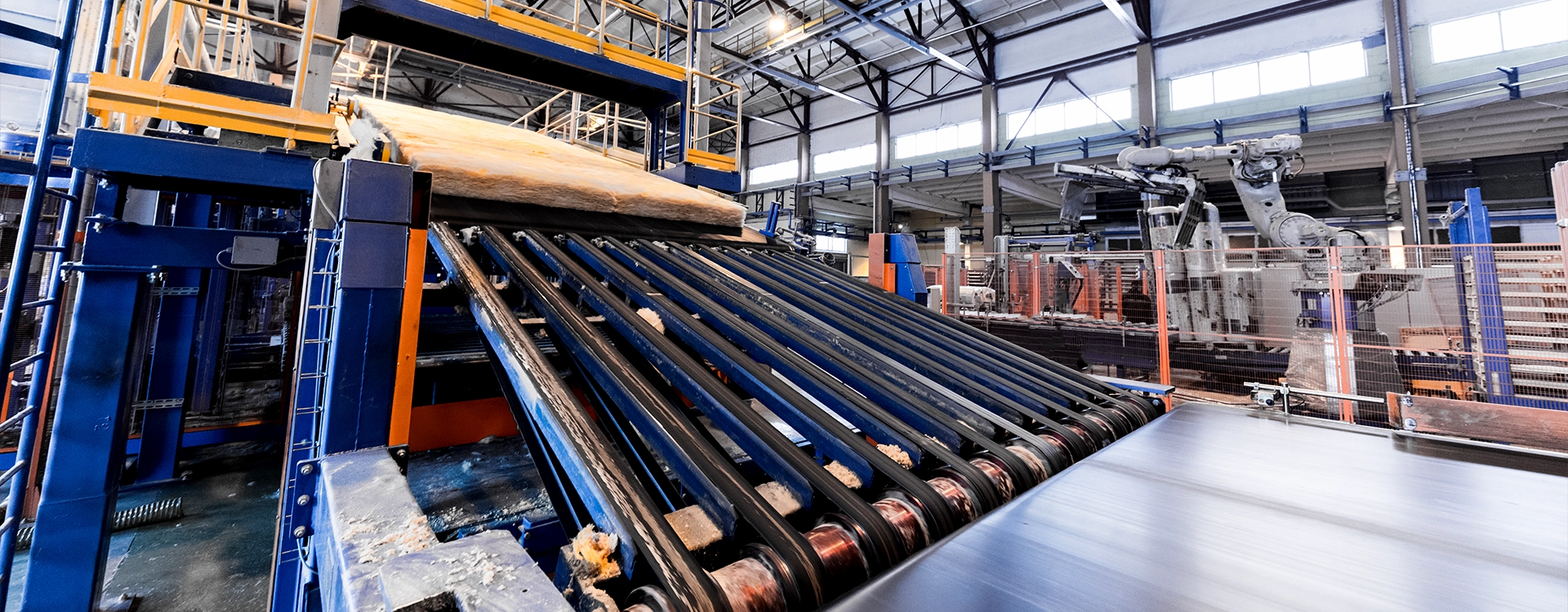
Rubber calendering is a manufacturing process in which rubber compound is passed through a series of heated rollers to produce flat sheets or coated fabrics with controlled thickness and surface finish. The rollers compress and smooth the material, creating consistent layers that would be difficult to achieve with other methods.
The calendering process typically involves:
-
Feeding prepared rubber compound into the calender
-
Passing the compound through multiple precision rollers
-
Adjusting roller spacing to control thickness
-
Cooling and finishing the calendered rubber sheet
In industrial rubber manufacturing, calendering is valued for its ability to produce large volumes of rubber material with tight dimensional tolerances. The result is a uniform sheet that can be cut, laminated, or further processed depending on the application.
Differences Between Rubber Calendering and Rubber Moulding
Although both processes are essential, rubber calendering and rubber moulding serve different purposes.
Rubber moulding involves shaping rubber compounds into finished parts using moulds, heat, and pressure. It is ideal for producing components with complex shapes such as seals, gaskets, and vibration mounts.
Rubber calendering, by contrast, is focused on producing flat or layered rubber materials rather than finished three-dimensional parts. Calendered rubber is often an intermediate product that is later cut, bonded, or moulded into final components.
In many manufacturing workflows, calendering and rubber moulding work together. Calendered sheets may be used as input material for moulding or as finished products themselves, depending on the application.
Applications Requiring Precision Rubber Sheets
Precision is one of the main reasons rubber calendering is used in industrial rubber manufacturing. Many applications require rubber sheets with consistent thickness, smooth surfaces, and reliable material properties.
Common applications include:
-
Conveyor belts and industrial belting
-
Rubber linings for tanks and pipes
-
Coated fabrics for insulation or reinforcement
-
Automotive and transport components
-
Construction membranes and vibration isolation layers
In these uses, even small variations in thickness or surface quality can affect performance, safety, or service life. Calendering allows manufacturers to meet strict specifications that are difficult to achieve through rubber moulding alone.
Benefits of Calendered Rubber in Industrial Use
Calendered rubber offers several advantages that make it a preferred choice for many industrial rubber applications.
Consistent Thickness and Surface Finish
Rubber calendering delivers highly uniform sheets, which is essential for applications requiring precise fit or predictable performance.
Efficient Large-Scale Production
Calendering is well suited to producing large quantities of rubber material efficiently, making it cost-effective for industrial-scale operations.
Improved Material Control
The process allows manufacturers to control surface texture, density, and bonding properties, improving downstream processing or installation.
Versatility
Calendered rubber can be cut, laminated, reinforced, or combined with other materials, offering flexibility across multiple industries.
These benefits complement rubber moulding by providing high-quality material inputs or finished sheet products for industrial use.
Quality Factors That Impact Final Rubber Products
The performance of calendered rubber depends on several critical quality factors. Attention to these details ensures that finished products meet industrial requirements.
Rubber Compound Quality
The consistency and formulation of the rubber compound play a major role in calendering results. Variations in compound properties can affect thickness control and surface finish.
Roller Precision and Temperature Control
Calender rollers must be precisely aligned and properly heated. Inconsistent temperatures or misalignment can cause uneven thickness or surface defects.
Process Control and Monitoring
Modern calendaring operations rely on careful monitoring to maintain consistent output. This includes controlling speed, pressure, and cooling rates.
Integration With Rubber Moulding
When calendered rubber is used as input for rubber moulding, compatibility between processes is essential. Poor coordination can lead to defects or performance issues in finished components.
Quality control throughout the calendering process helps ensure reliable industrial rubber products that perform as intended.
Rubber Calendering’s Role in Industrial Rubber Manufacturing
While rubber moulding produces finished components, rubber calendering provides the foundation for many industrial rubber solutions. Together, these processes allow manufacturers to address a wide range of design and performance requirements.
Calendering is particularly valuable when large, flat, or layered rubber materials are needed. Its ability to deliver consistency at scale makes it a critical step in industries where reliability and precision are non-negotiable.
Why Manufacturers Continue to Rely on Calendering
Despite advances in other rubber processing technologies, rubber calendering remains relevant due to its proven reliability and versatility. Many industrial sectors continue to rely on calendered rubber for applications that demand uniformity and durability.
By combining rubber calendering with rubber moulding, manufacturers can offer comprehensive solutions that meet both material and component-level requirements.
Final Thoughts
Rubber calendering is a critical step in industrial rubber manufacturing, providing precision, consistency, and scalability that many applications depend on. While rubber moulding shapes finished components, calendering creates the high-quality rubber sheets and layers that support a wide range of industrial uses.
Understanding the role of calendering, how it differs from rubber moulding, and what quality factors matter most helps businesses make informed decisions when sourcing or specifying industrial rubber products.
In industries where performance, safety, and reliability are essential, rubber calendering remains an indispensable part of the manufacturing process.

 English
 Arabic
 French
 Spanish
 Portuguese
 Deutsch
 Turkish
 Dutch
Dutch
 Italiano
 Russian
 Romaian
 Greek
Greek